25 Years of Creating Designing Creating Aquariums and Koi Ponds in Chennai
We are a manufacturer, not a reseller. Tanks are fabricated in our own workshop, filtration systems are specified and built rather than bought off a shelf, and the same team that designs a project installs it and services it afterwards. When something goes wrong three years later, the people who come out are the people who built it.
Living Art Aquarium has designed, built and maintained custom aquariums and koi ponds in Chennai since 2001.
This page is about who does that work and how.
Our Story Since 2001
The company started in 2001, but the experience behind it started earlier and somewhere else. Our founder spent several years in the international ornamental fish trade, supplying fish between continents from a base in the Maldives, before returning to Chennai to set up Living Art Aquarium. That is an unusual route into aquarium building, and it shaped the business.
Someone who has been responsible for keeping fish alive across a supply chain thinks about water quality, quarantine and stress differently from someone who came to the trade through construction or interior fit-out.
Twenty five years later, that emphasis has not changed. We still treat the aquarium as a life support system first and a piece of furniture second, which is why the filtration design comes before the cabinetry on every project we quote.
The work has grown from single tanks into complete installations: large acrylic aquariums, koi ponds with engineered filtration, indoor water features, and the maintenance contracts that keep them all running. We work across Chennai and take projects elsewhere in South India.

Meeran, Managing Director
Meeran was born in Chennai and founded Living Art Aquarium after several years trading ornamental fish internationally from the Maldives. He has been developing his own approach to aquarium systems since 1999.
His technical specialism is marine quarantine control, which is the discipline of bringing marine livestock into a system without importing disease with it. It is one of the least visible parts of this trade and one of the most consequential, since most catastrophic losses in a marine tank trace back to something introduced rather than something that developed.
He continues to travel for the work, visiting Germany, Singapore, Thailand and Indonesia to study marine life and keep up with technique. Much of what we do differently came back from those trips rather than out of a catalogue.
Away from the business, he is a competitive badminton player at state and national level and a scuba diver, which is not incidental. Diving tropical reefs is where a good deal of his design thinking about aquascaping and biotope comes from, and he describes the job as the one he would have chosen anyway.
The Engineering Behind Our Work
A large aquarium or a koi pond sits at the intersection of several trades, and the reason so many installations disappoint is that they are built by someone competent in one of them and guessing at the rest.
These are the disciplines a project actually requires, and they are all handled in house.
Structural design.
A filled tank or pond is a serious load. Six feet by two by two holds around 680 litres, and with substrate, cabinet and sump the total approaches a tonne on roughly one square metre. That has to be carried by a stand, a slab or a wall that can take it, positioned against a load bearing element rather than mid span, and distributed rather than concentrated.
Filtration and flow design.
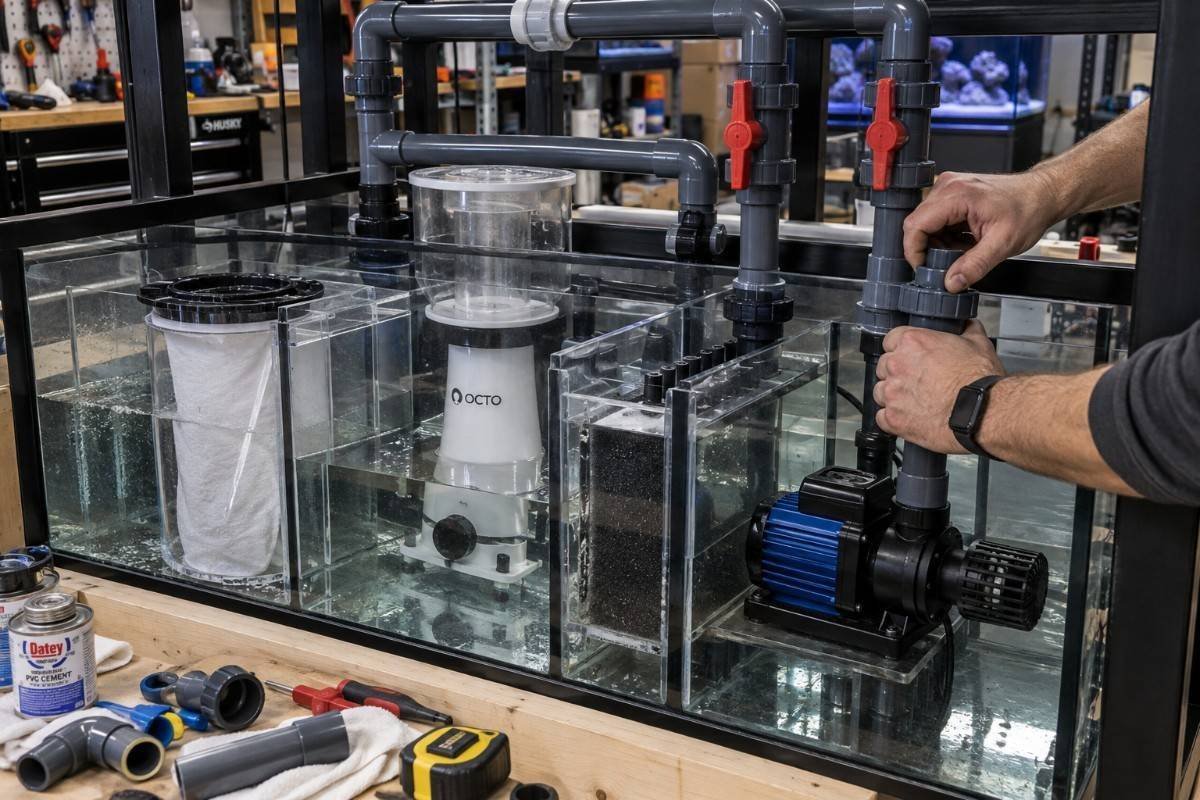
Mechanical, biological and UV stages sized to the fish load rather than to the water volume, in the correct order, with turnover matched to stocking. This is the difference between a system that stays clear and one that needs constant intervention, and it is the single most common thing done wrong.
Water chemistry.
Ammonia, nitrite, nitrate, pH, hardness and dissolved solids, understood as a system rather than a checklist. Chennai adds a local complication: municipal supply and borewell water differ substantially in hardness and dissolved solids, so the same tank behaves differently depending on what fills it.
Plumbing.
Bottom drains, gravity returns, overflow and standpipe design, sump plumbing, drain routes and top-up lines, all of which have to be cast in or routed during construction rather than added later.
Electrical.
Pumps, lighting, heaters, chillers and controllers, with the load planned and the runs placed safely around a body of water. Building supply work requiring a licensed electrician is flagged at quotation rather than absorbed quietly.
Aquascape execution.
Hardscape composition, planting, and the judgement of how a layout will read once it has grown in rather than on installation day.
Our Workshop
We work from our own premises in Thiru Vi Ka Nagar, in the Perambur area of north Chennai.
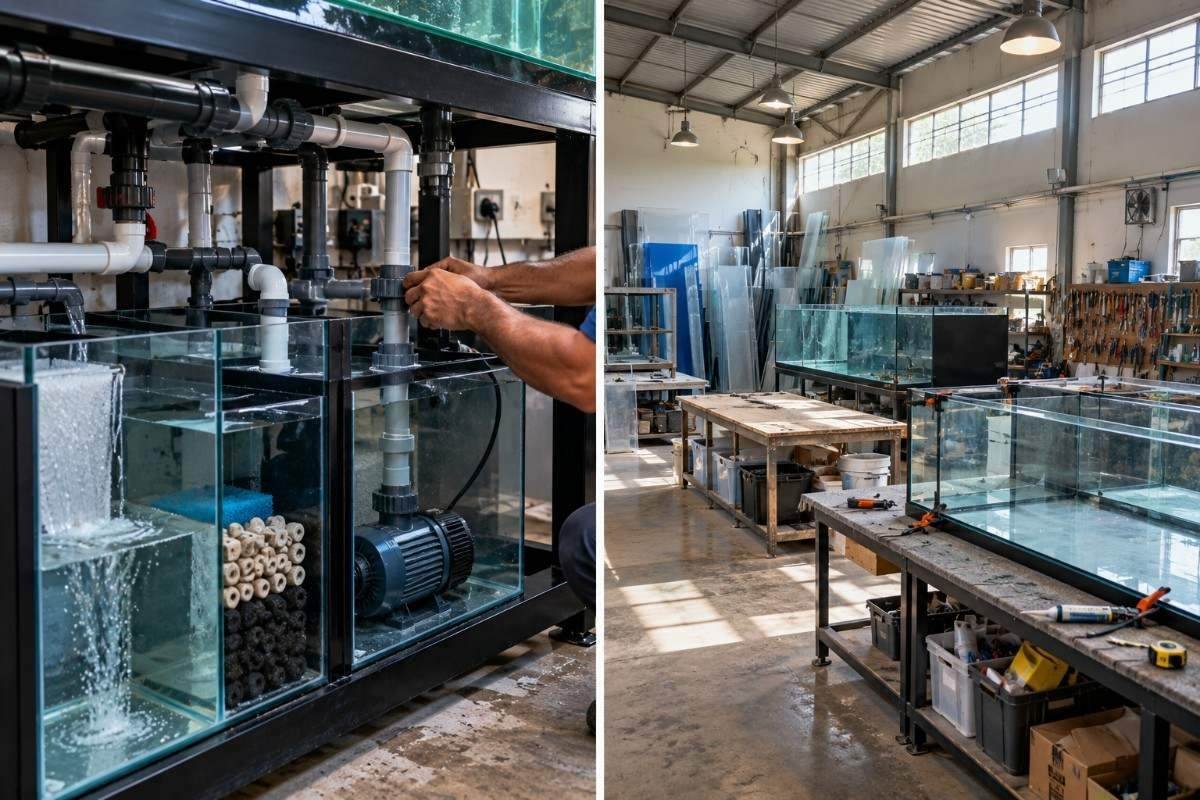
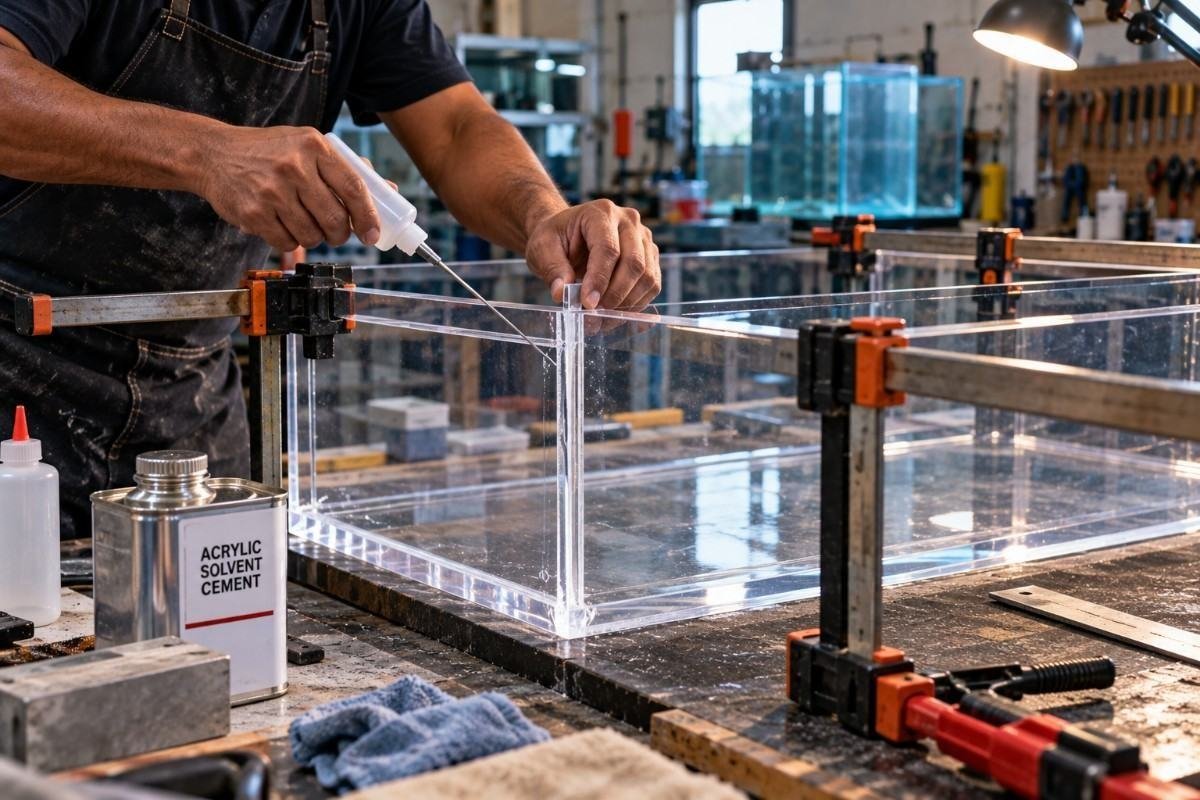
Having a workshop rather than only an office matters more than it sounds. It means acrylic is formed and bonded on our own equipment to our own tolerances, on our own schedule. It means a tank can be built to a dimension rather than sourced to the nearest available size. It means a client can come and see a tank being made, which is an offer very few aquarium companies in this city can make.
It also removes a layer of risk from your project. When fabrication is outsourced, a delay or a defect at the supplier becomes your delay and your defect, and the company you paid is in the position of relaying bad news rather than fixing it. We do not have that gap.
Clients and Sectors We Have Served
Twenty five years of work across a broad spread of settings, each with its own demands.
Homes, villas and apartments.
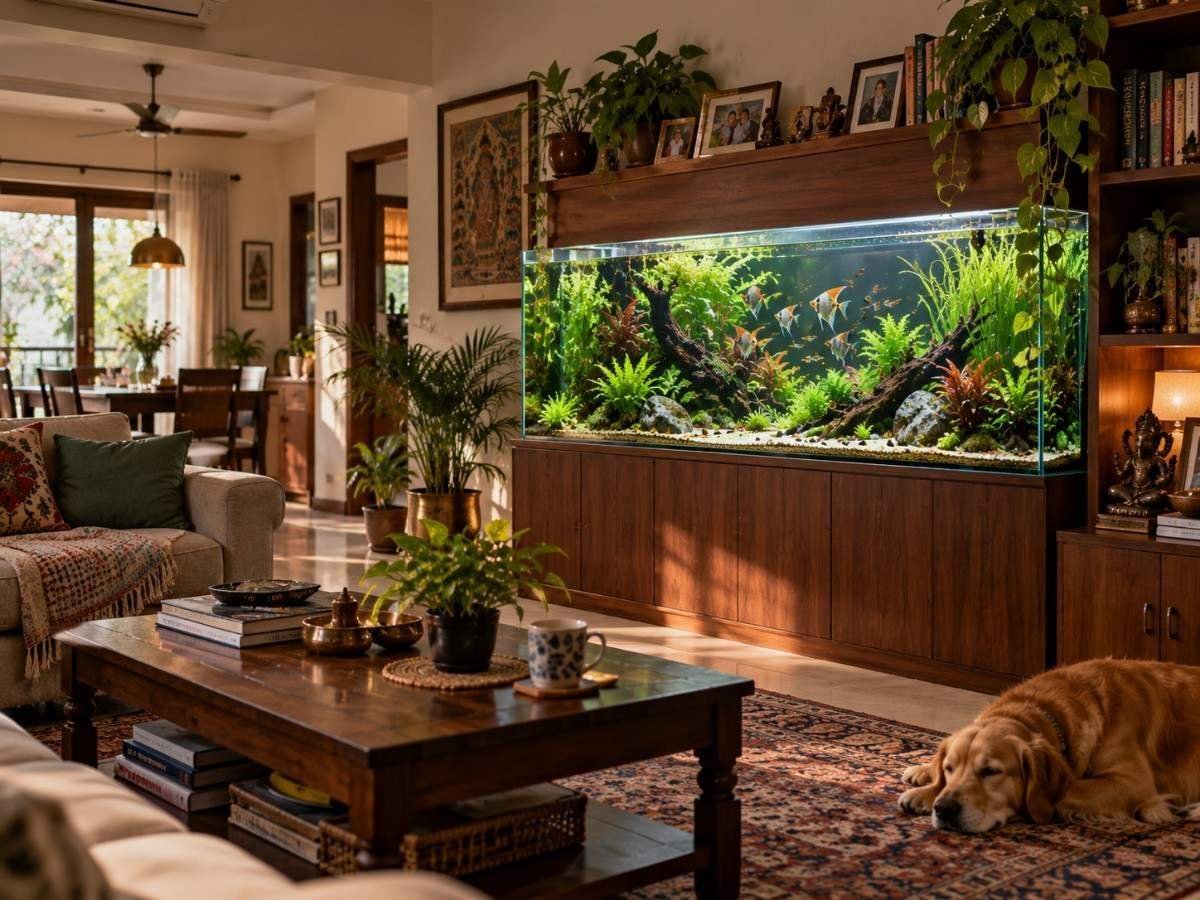
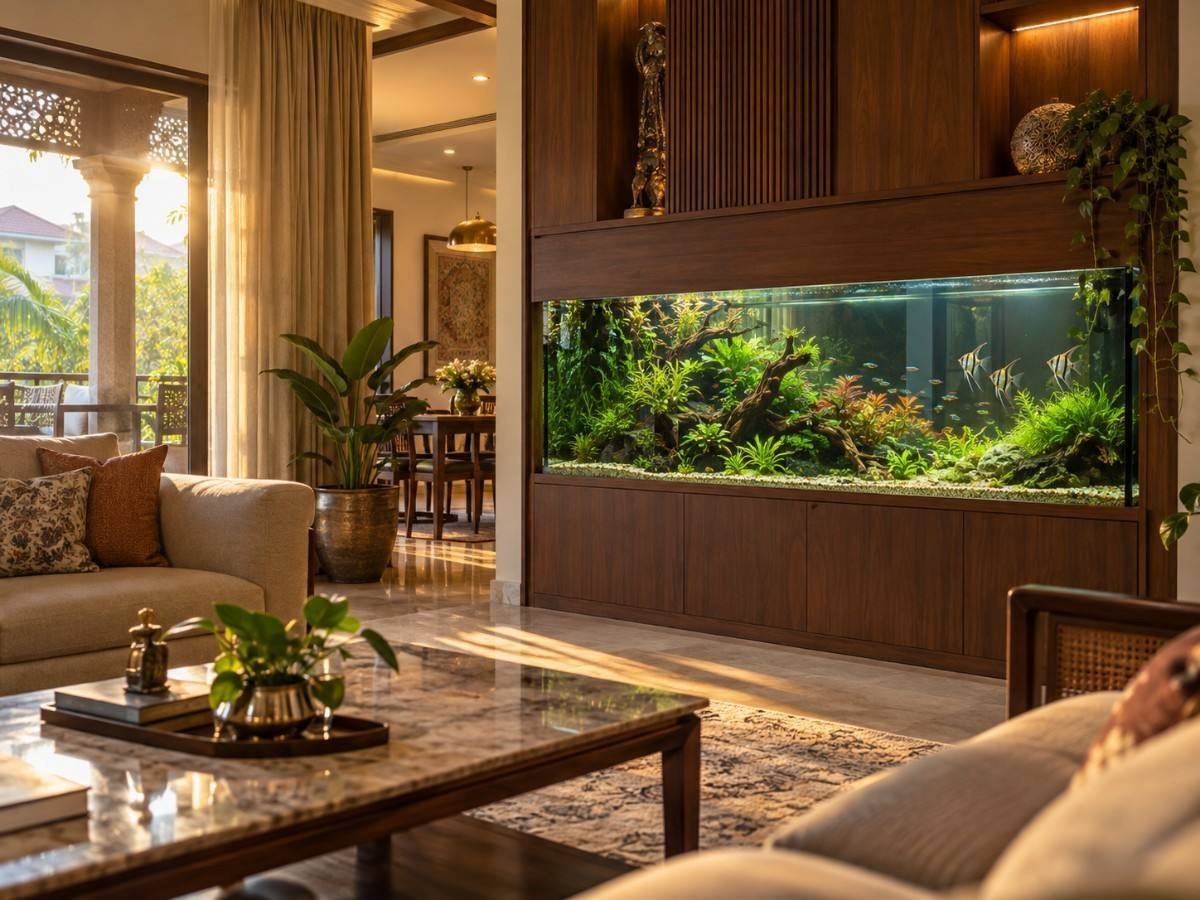
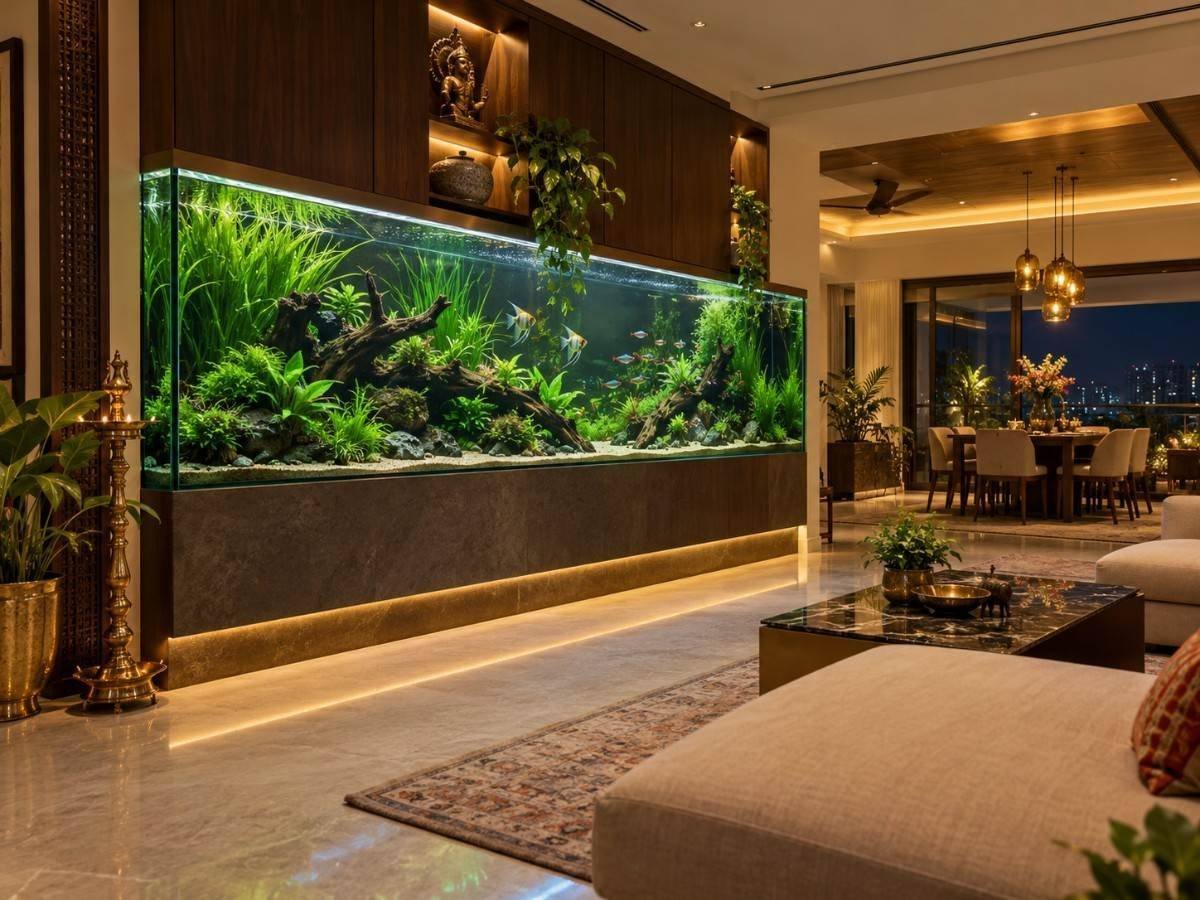
The largest share of our work. Living room feature tanks, built-in partition aquariums between hall and dining areas, garden koi ponds and entrance water features.
Hotels and restaurants.
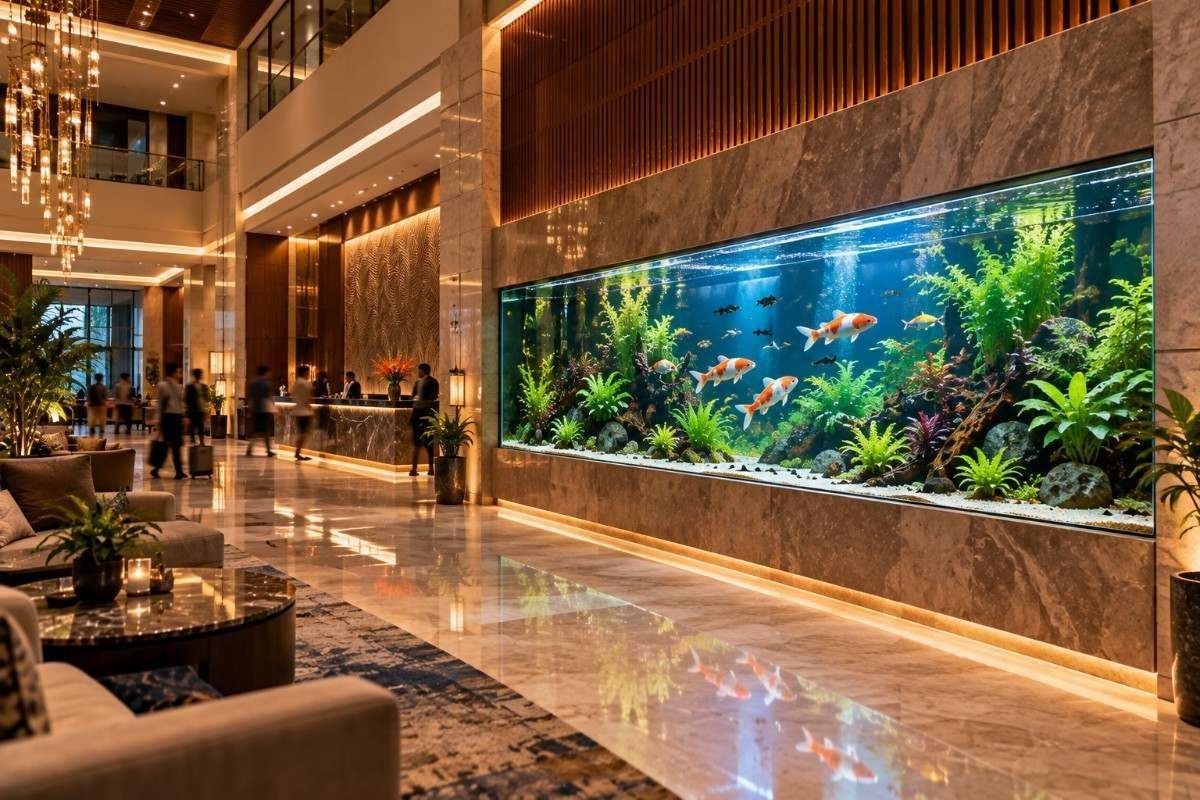
Lobby installations at architectural scale, where the tank is a design element and cannot be offline during business hours.
Corporate offices.
Reception and breakout installations, specified for quiet operation and serviced around working hours.
Clinics and hospitals.
Waiting area aquariums, where quiet running and cleaning that fits around patient flow are requirements rather than preferences.
Showrooms and commercial frontages.
Installations built to be seen from outside and to hold up under long lighting hours.
Architects, interior designers and contractors.
We work with architects and designers from AutoCAD drawings, providing tank dimensions, load figures, and service requirements for seamless project coordination.
How We Are Different From an Aquarium Shop
This distinction matters when you are comparing quotes, because the two businesses look similar from outside and are not remotely the same thing.
An aquarium shop sells fish, equipment and standard tanks, and may offer installation as a service attached to the sale. The business is retail. The tank is a product on a shelf in a size someone else decided, and the filtration is whatever unit the manufacturer rated for that volume.
We manufacture. A project starts with a measurement of your space, not with a catalogue. The tank is fabricated to that dimension, the filtration is specified against your fish load rather than your water volume, and the installation includes the plumbing, the electrical runs and the cabinetry or civil work the system needs. Afterwards, the same team maintains it.
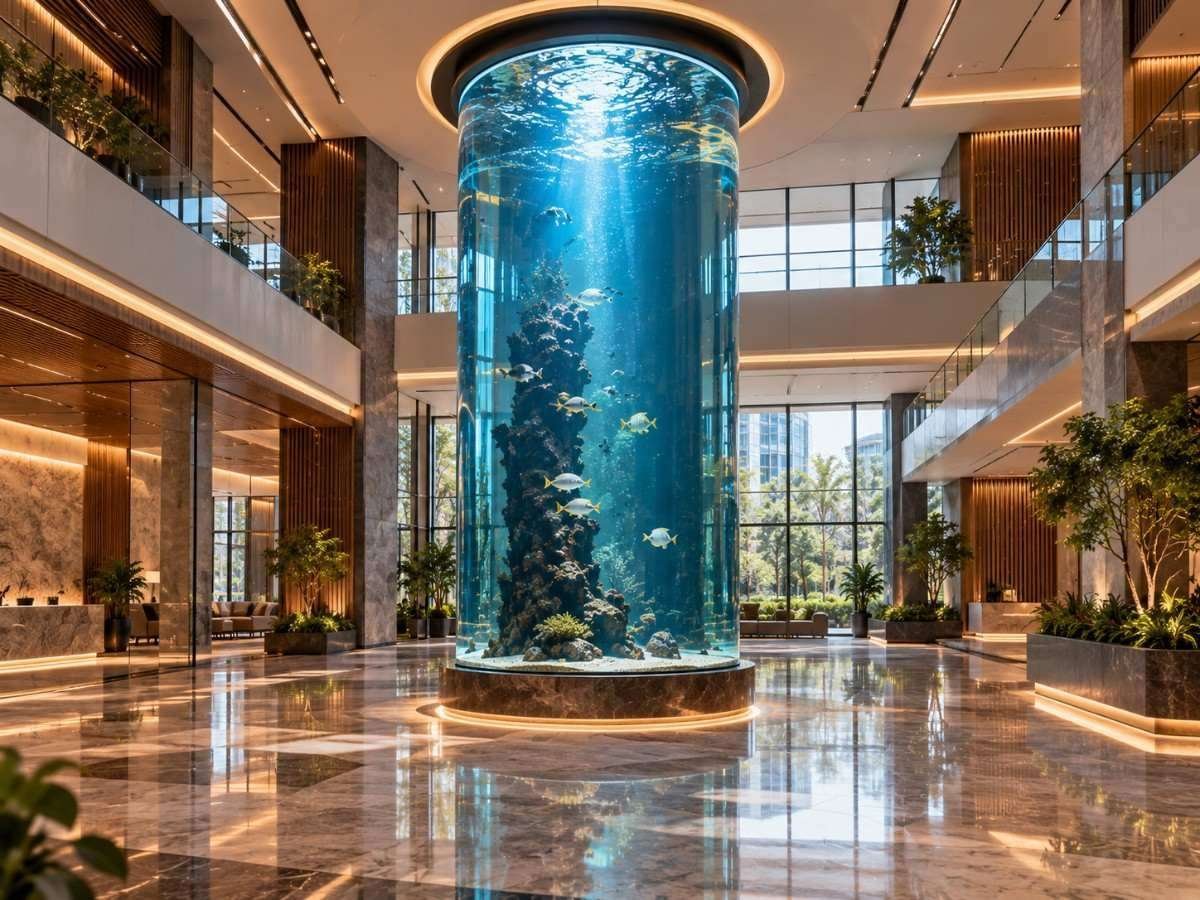
The practical differences show up in the places that cost money later. A shop will sell you a filter rated for your tank size, which is the wrong basis for sizing biological filtration and the reason many tanks struggle. A shop cannot build a cylinder, a partition tank or an acrylic viewing window. And a shop has no reason to tell you that the tank you want is too large for your floor, because that conversation loses a sale rather than saving a project.
There is nothing wrong with an aquarium shop for a standard tank in a standard size. For anything built into a building, at scale, or intended to still be right in ten years, you want a manufacturer.
Common Questions About Living Art Aquarium
How many years of experience does Living Art Aquarium have?
Twenty five years. The company was founded in Chennai in 2001 and has designed, built and maintained custom aquariums and koi ponds continuously since. Our founder worked in the international ornamental fish trade before that, and has been developing his own approach to aquarium systems since 1999.
Where is Living Art Aquarium located?
Our workshop and office are in Thiru Vi Ka Nagar, in the Perambur area of north Chennai. We work across the Chennai metropolitan area and take projects elsewhere in South India.
Is acrylic better than glass for a large aquarium?
A manufacturer. Tanks are fabricated in our own workshop rather than bought in and marked up, and filtration systems are specified and built for each project instead of selected from a catalogue by tank volume. The same team designs, builds, installs and maintains, which is why there is no supplier between us and the work when something needs fixing.
What skills go into building a large custom aquarium?
Six disciplines, all of which have to be right. Structural design, because a filled tank approaches a tonne over a small footprint. Filtration and flow design sized to the fish load. Water chemistry. Plumbing for drains, returns and top-up. Electrical for pumps, lighting and temperature control. And aquascape execution, which is the judgement of how a layout will look once it has grown in. Most failed installations are competent in some of these and guessing at the others.
Do you work on aquariums and ponds built by someone else?
Yes, and it is a significant part of what we do. Maintenance contracts, filtration upgrades and repairs to poorly built ponds are all work we take on regardless of who built the original.
Talk to Us About Your Project
Tell us about the space you have in mind, or send your drawings. For sites in and around Chennai we will visit and measure them ourselves.
If you would rather see the work before talking about yours, our completed projects are worth a look.
Designs, builds and maintains custom aquariums, koi ponds and aquatic features with a focus on thoughtful engineering and long-term care.
SUBSCRIBE FOR UPDATE
©Living Art Aquarium 2026. All rights reserved.