
Custom Aquariums Designed and Built for Your Space Office Home
A custom aquarium in Chennai is not simply a larger version of a shop tank. It is built to a measurement, sized against a wall, a stairwell, a reception counter or the opening between a hall and a dining area, and engineered to hold several hundred kilograms of water safely for many years. The tank is the visible part. The filtration, the cabinetry and the structural planning behind it are what decide whether it still looks good in year five.
Living Art Aquarium designs, fabricates and installs custom aquariums in Chennai, and has been doing this work for over two decades. We build for homes, villas, offices, hotels, restaurants and clinics, and we take projects across Tamil Nadu and in other Indian metros including Bangalore.
What “Custom” Means Here
A custom aquarium starts as a site measurement rather than a catalogue code. You tell us the space, the viewing angle and the look you are after, and we work backwards from there to a tank size, a material, a filtration system and a stand that fits the room and the floor beneath it.
In practice a project has three parts, and the tank is usually the least complicated of them.
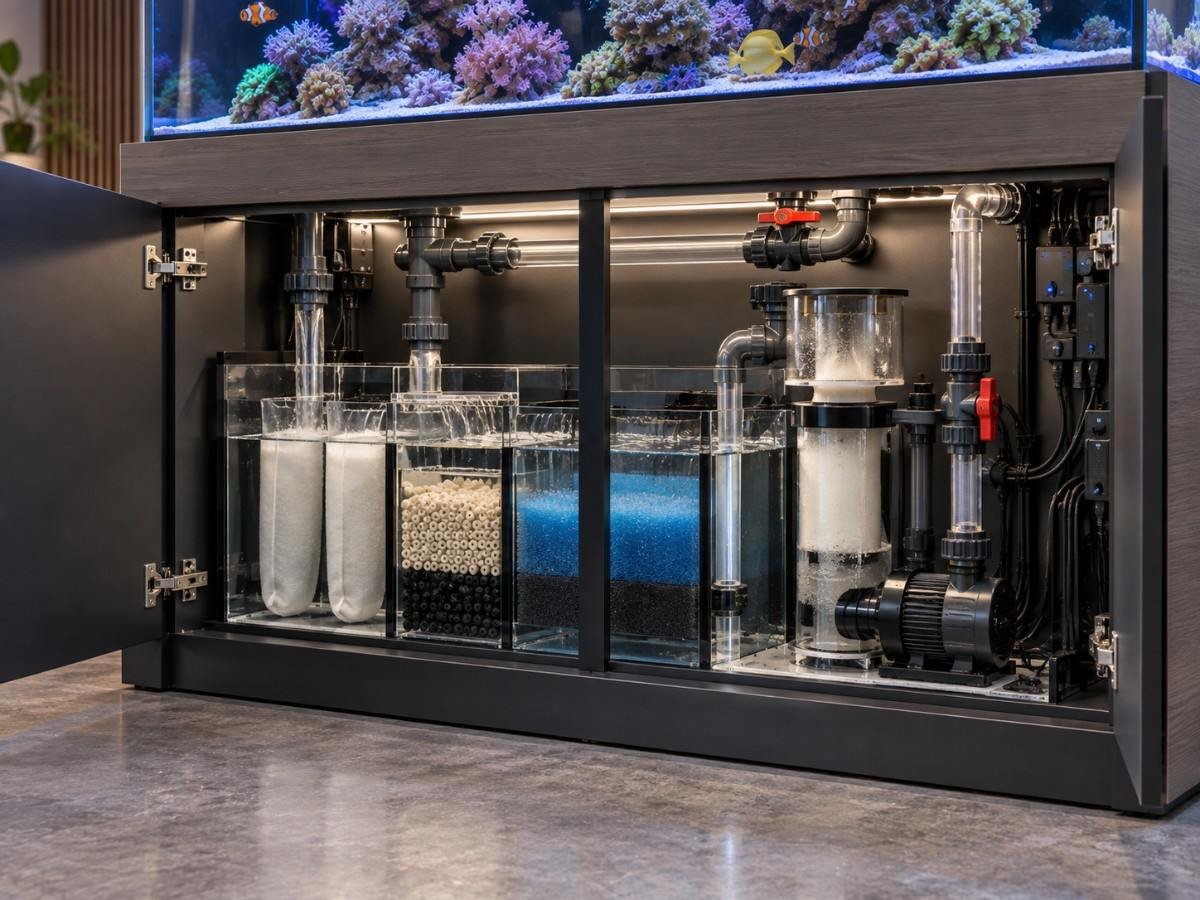
The tank itself is the shell, fabricated in cast acrylic or glass to the dimensions and shape your space allows. The life support system is the filtration, circulation, heating or cooling, lighting and plumbing that keeps the water stable, and it is normally hidden in a sump below the tank or in an adjacent service space. The cabinetry and civil work is the stand, the surround, the access panels and any masonry that has to be built or cut to receive the tank.
Most of the cost sits in the second and third parts, not the first. Two aquariums of identical size can differ substantially in price because one runs a simple canister filter behind a plywood cabinet and the other runs a sump with a skimmer, a chiller and a service hatch built into a marble clad wall. When you brief us, the useful information is the space and how you want to live with it. We will tell you what the system behind it needs to be.
We also build to order rather than to stock. Nothing on this page is a product you pick off a shelf, which is why the page has no prices on it and why every enquiry starts with a measurement.
Acrylic vs Glass: An Honest Comparison
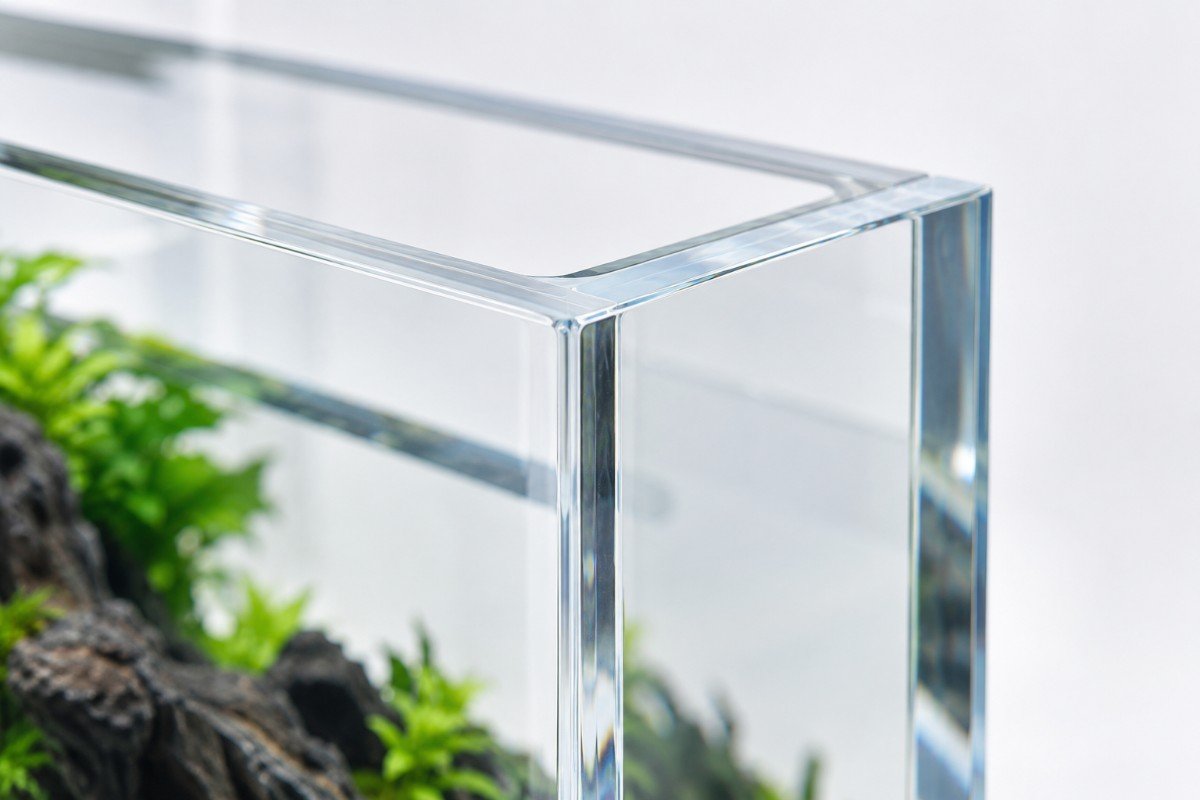
For most large or unusually shaped tanks, an acrylic aquarium is the better answer. For standard rectangular tanks up to around four feet in length, glass is usually the sensible and more economical choice. Neither material is better in every situation, and any builder who tells you otherwise is describing what they are set up to fabricate rather than what your project needs.
Acrylic is roughly half the weight of glass for the same panel, which matters a great deal once a tank gets big. That weight saving reduces what the stand and the floor have to carry, and it is often the difference between a tank that can go in as designed and one that needs structural attention first. Acrylic is also far more impact resistant, which is why large public aquarium viewing panels are almost always acrylic rather than glass.
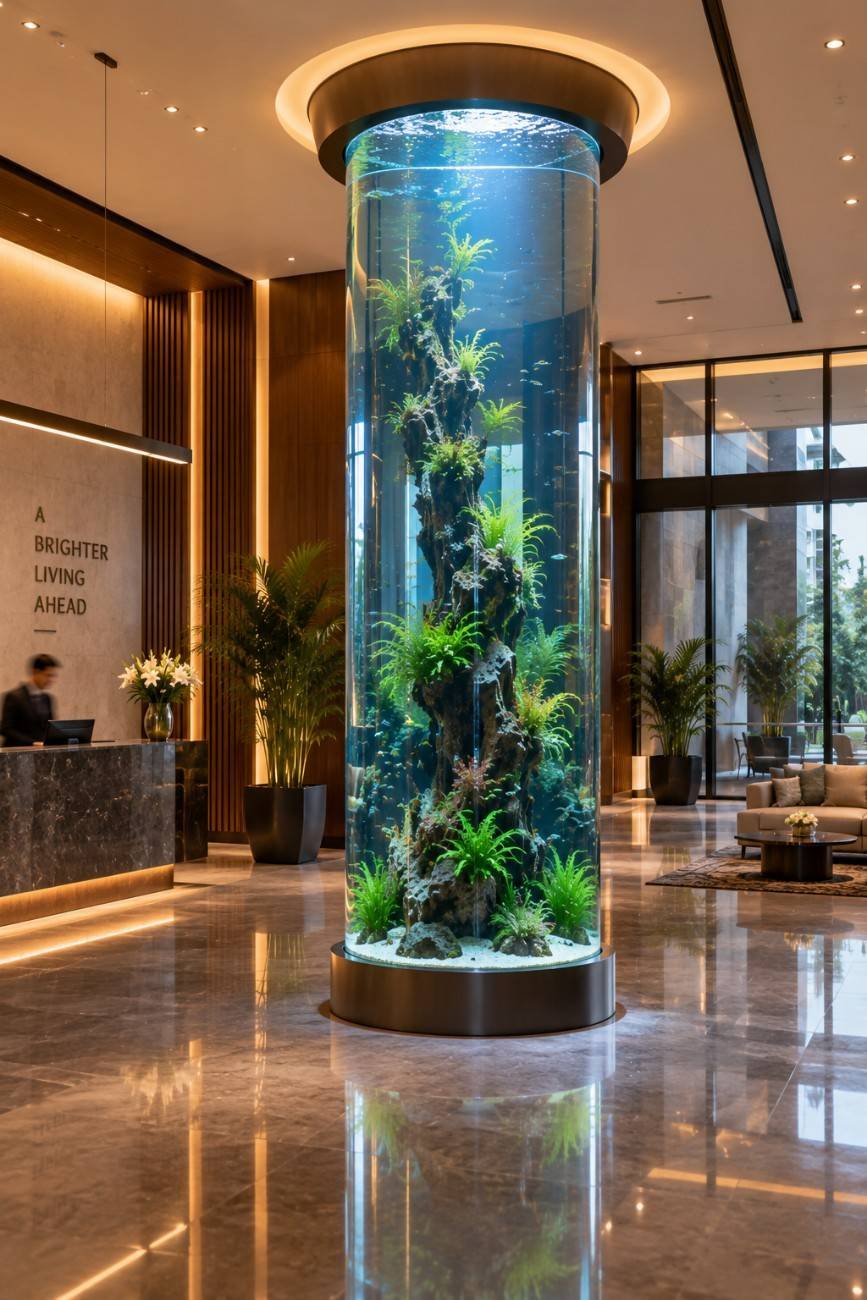
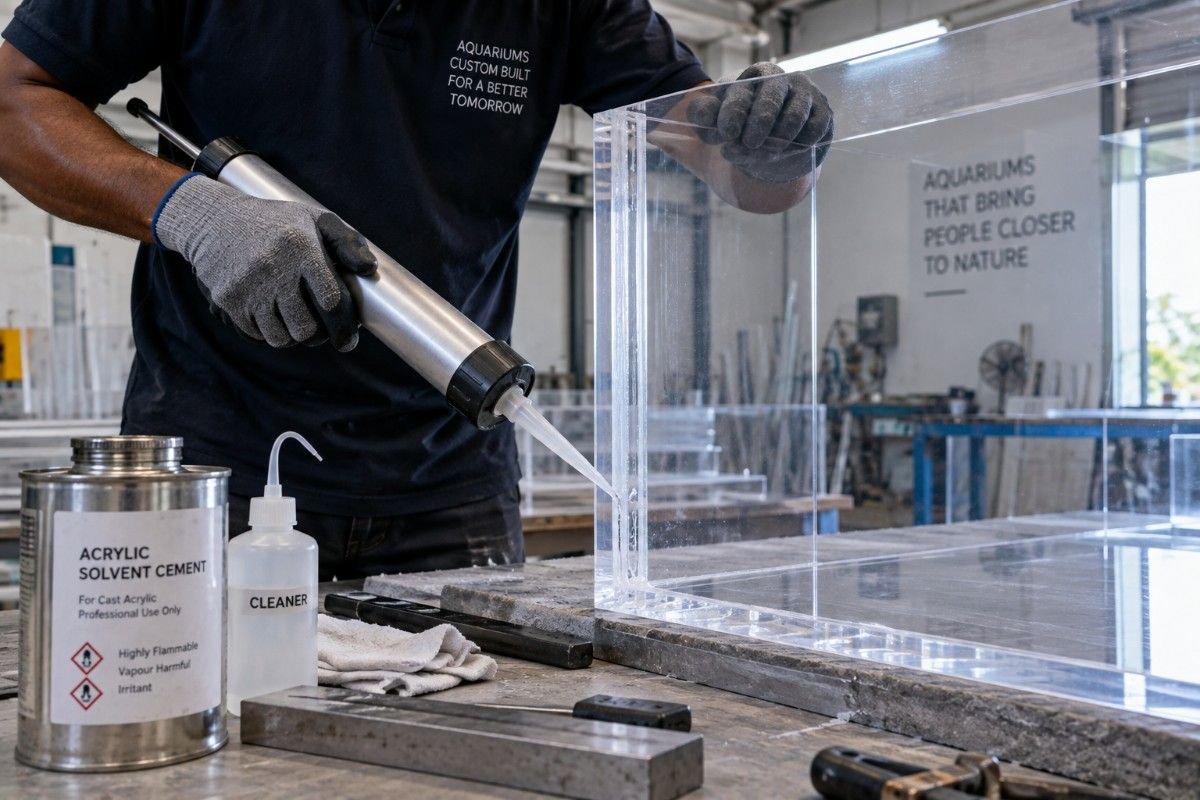
The bigger advantage is shape. Acrylic can be thermoformed and solvent bonded, so curves, seamless cylinders, bow fronts, arches and corner units are all possible. Glass in those shapes either cannot be done or requires visible seams. If you want a seamless cylindrical aquarium or a pillar tank wrapped around a structural column, acrylic is the only realistic route.
Glass wins on scratch resistance. An acrylic fish tank has a softer surface and will mark if it is cleaned with the wrong pad or if sand gets trapped under a magnet cleaner. The trade off is that scratches in acrylic can be polished out, while a crack or a deep scratch in glass cannot be repaired at all. Glass also holds its clarity indefinitely, whereas acrylic can discolour slightly over a long period if it is exposed to constant direct sunlight.
On cost, acrylic panels are more expensive per square foot than standard glass, but the gap closes as the tank gets larger and the glass version needs very thick panels and a much heavier stand. For small and mid sized rectangular tanks, glass is almost always cheaper. For anything large, curved or seamless, acrylic frequently works out comparable once the full system is costed.
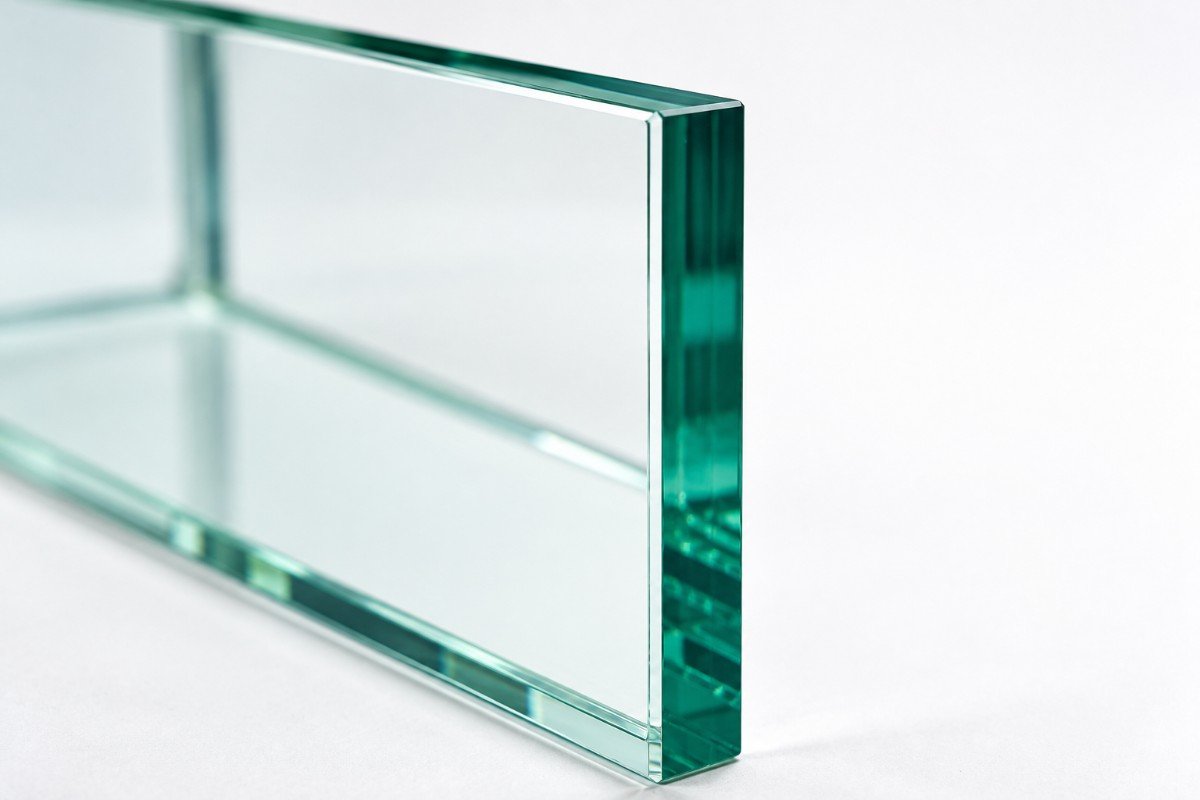
Clarity is closer than most people expect. Standard float glass carries a faint green tint from its iron content, and that tint becomes visible once panels get thick, which is exactly when large tanks need thick panels. Low iron glass removes the tint and matches acrylic for clarity, but it costs considerably more, which narrows the price gap between the two materials at the premium end.
Home and Residential Aquariums
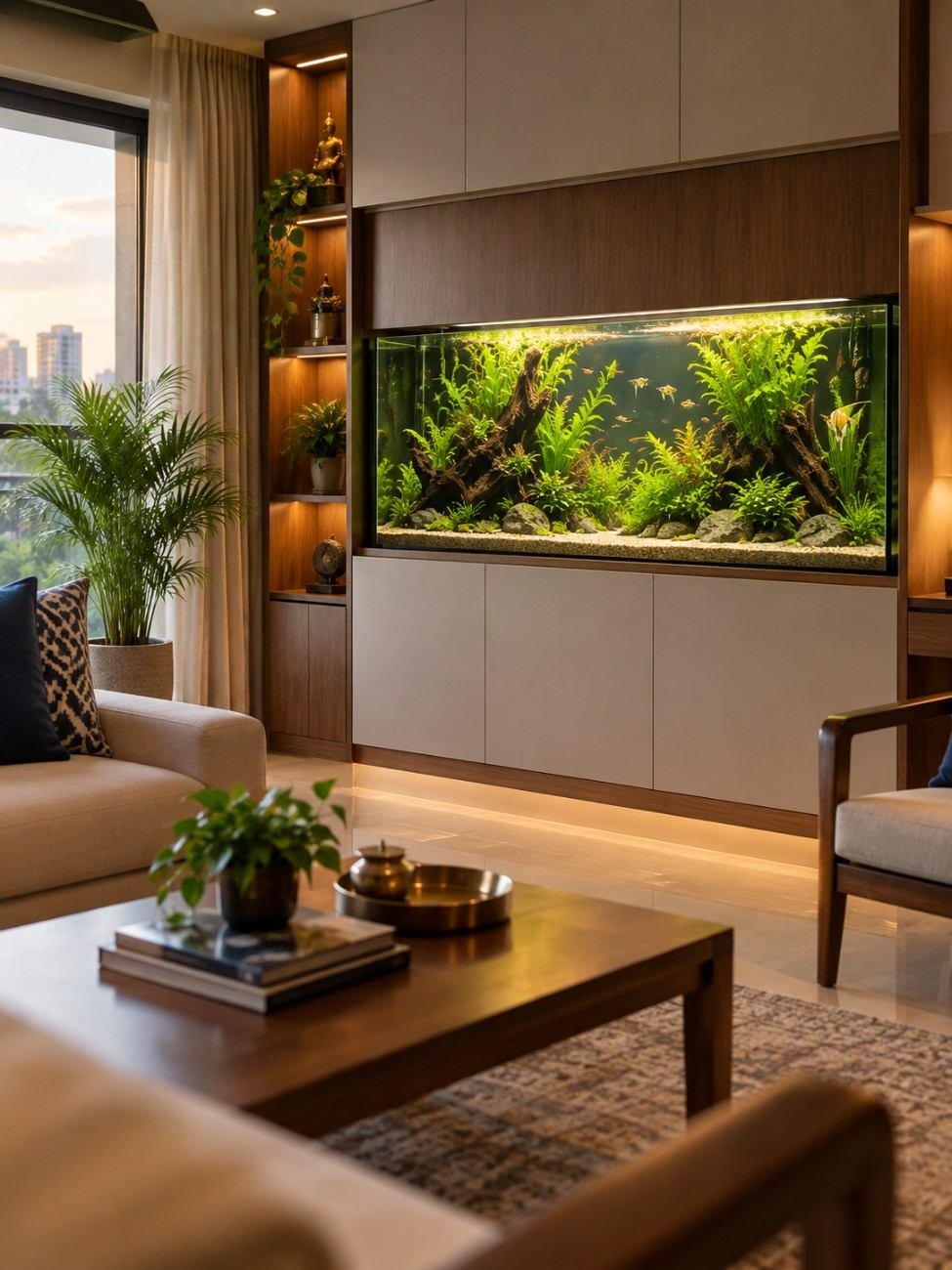
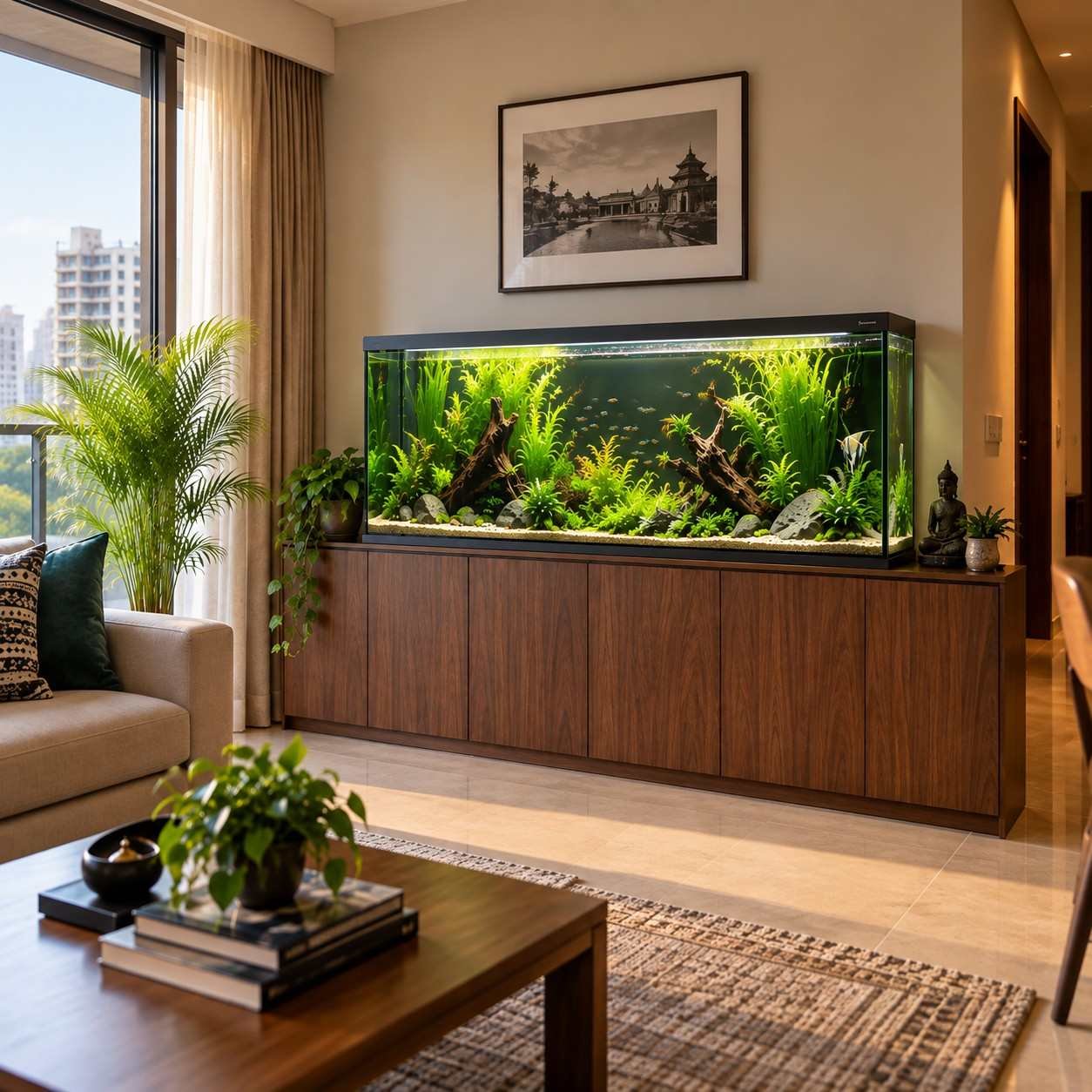
A home aquarium in Chennai is usually one of two projects. Either it is a feature tank in the living room, sized to a wall and integrated with the joinery, or it is a built-in element in a villa or duplex, set into a partition, under a staircase or in a double height space where the tank can be tall enough to be seen from two levels.
The living room is the most common location and the easiest to service. It gives you a viewing distance that suits a tank of four to eight feet, it usually has a wall that can take the cabinetry, and it keeps the equipment noise away from bedrooms. A sump under the cabinet is quieter than a canister filter in most cases, and it hides the heater, the media and the top up reservoir out of sight.
For villa projects we can go further. Tanks set into a wall between the hall and the dining area, aquariums built into a stair landing, and tall pillar tanks in a foyer all work well when the planning is done before the civil work is finished. The one constraint that catches people out is service access. A beautiful built-in tank with no way to reach the plumbing becomes a maintenance problem within a year, so we plan the access panel and the drain route at the same time as the opening.
Cost in residential projects is driven less by the tank than by the surround. A freestanding tank on a fabricated cabinet is the economical option. Once the aquarium is set into masonry and fitted with a concealed service route, the joinery and civil work become the larger share of the budget.
Aquariums in Apartments
Apartments are entirely workable, but they need a size conversation early, because in a flat you cannot reinforce a slab the way you can in an independent house. The practical answer is usually to position the tank along a load bearing wall or over a beam rather than in the middle of a room, and to size it to that position. The structural detail is covered further down this page.
If you are in an apartment on OMR, ECR, Velachery or anywhere with a standard RCC slab, we will look at where the tank can sit before we talk about how big it can be. That order matters.
Vastu and Aquarium Placement
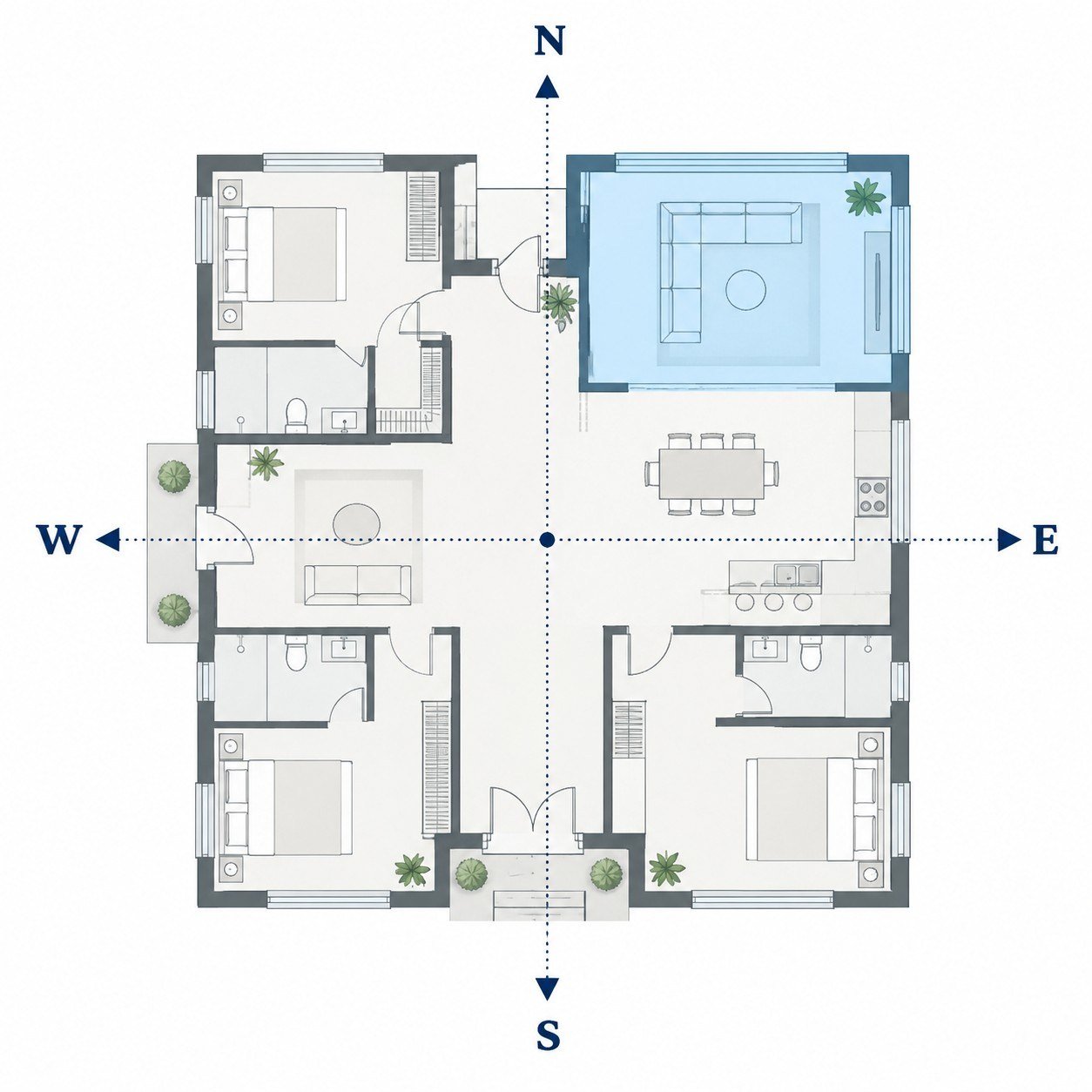
Most vastu practitioners recommend placing an aquarium in the north, east or north east of the home, and the living room is generally considered the best room for it. The north east in particular is associated with the water element, which is why it comes up most often.
It is worth being straightforward here, because the advice is not uniform. Some practitioners, including many in Tamil Nadu, specifically recommend the south east corner of the hall instead. The directions most consistently advised against are the south and south west, and the rooms most consistently advised against are the bedroom and the kitchen. Placement under a staircase, near a heat source or in direct sunlight is discouraged on both vastu and practical grounds, and the practical reasons are sound regardless of what you believe: direct sun drives algae, and heat sources make temperature control harder.
We build to whichever direction your consultant specifies. If you have a vastu requirement, tell us at the measurement stage rather than after the drawings are approved, because the direction of the tank affects where the sump, the drain and the power points have to go.
Commercial, Hotel and Office Aquariums
A commercial aquarium is a different brief from a domestic one, even at the same size. It will be seen by more people, cleaned on a schedule rather than when someone notices, and it cannot be taken offline during business hours. Those three facts change how the system is specified.
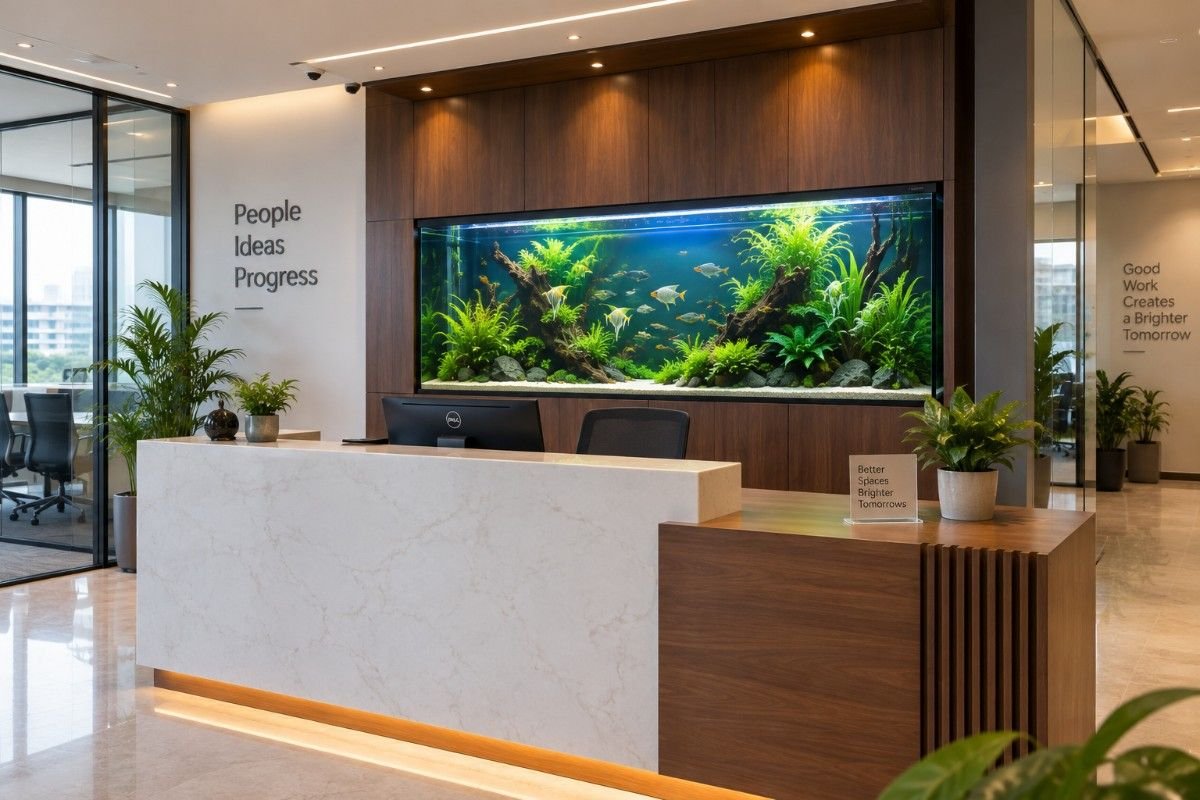
In an office, the aquarium usually sits in the reception area or as a divider between the waiting area and the workspace. A double sided tank works well in that position because it earns its footprint from both directions. The specification points that matter are noise, since the equipment sits close to people working, and service access, because the technician needs to reach the sump without moving furniture or disturbing meetings.
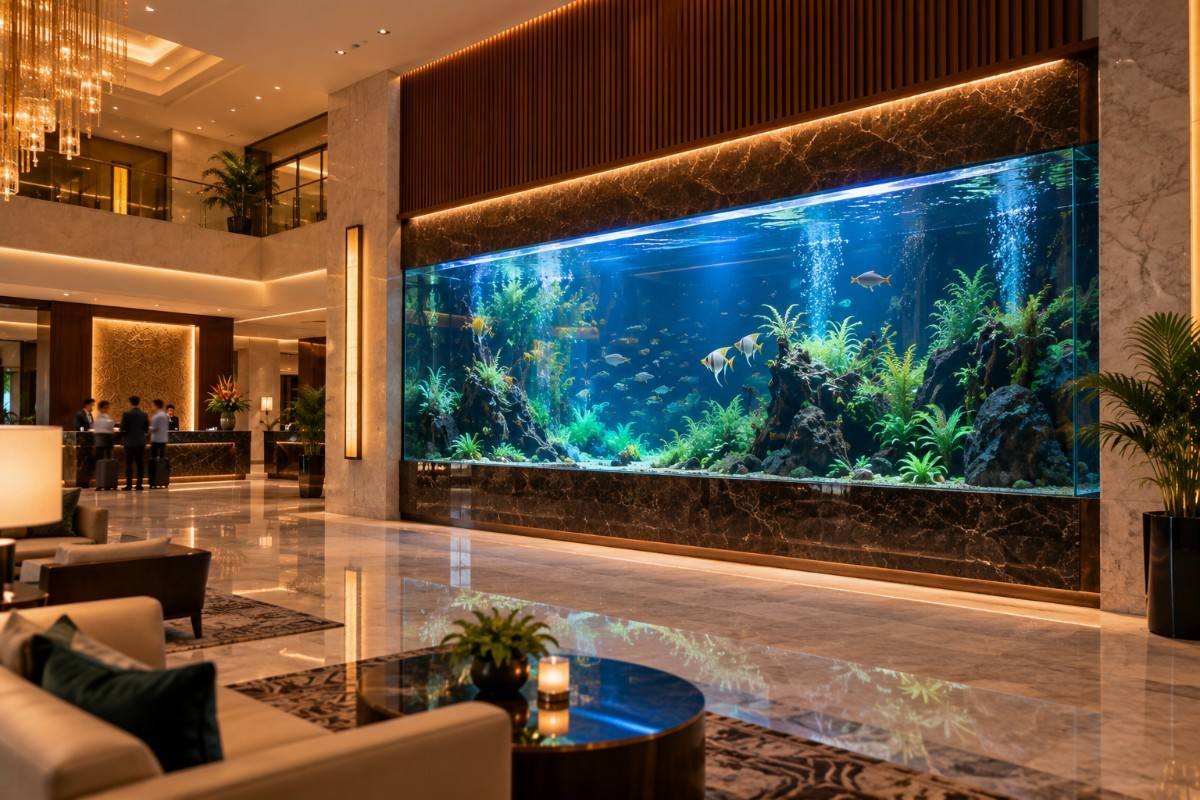
Hotel lobbies allow for scale. A lobby tank can be tall and wide enough to act as an architectural element rather than a decorative one, which usually means acrylic and usually means the tank is planned with the interior contractor rather than installed afterwards. The same applies to restaurant installations, where the distinction to settle early is whether the tank is a display feature or a live holding system, because the filtration requirements are completely different.
Clinics and hospital lobbies have their own constraints. Quiet operation matters more than anywhere else, the hood usually needs to be sealed, and cleaning has to fit around patient flow. These are very achievable requirements, but they need to be stated in the brief rather than discovered at installation.
For every commercial project, budget the maintenance alongside the build. A commercial aquarium that is not on a scheduled service contract will look poor within a few months, and the reputational cost of a cloudy tank in a lobby is higher than the cost of servicing it. We would rather quote you a build and a maintenance contract together than quote you a build alone.
Wall-Mounted and Partition Aquariums
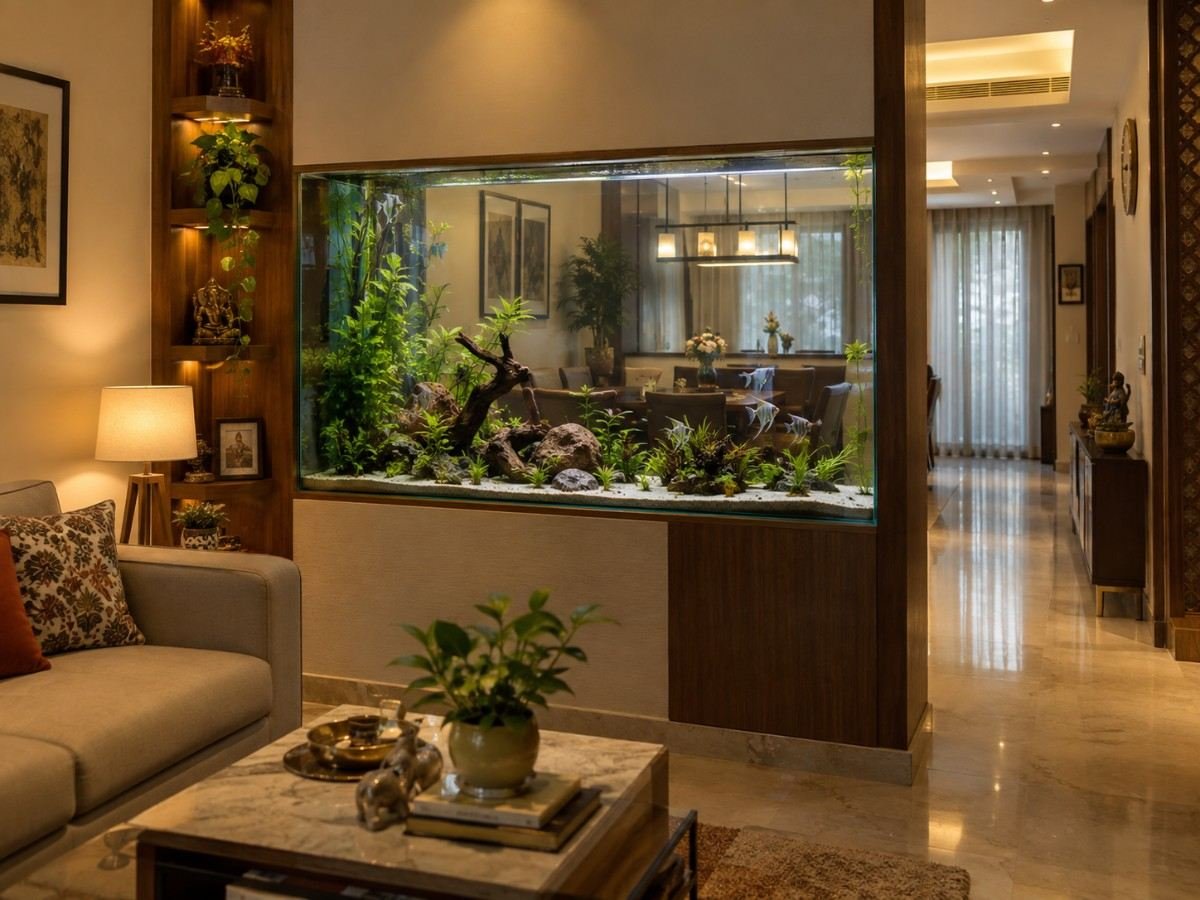
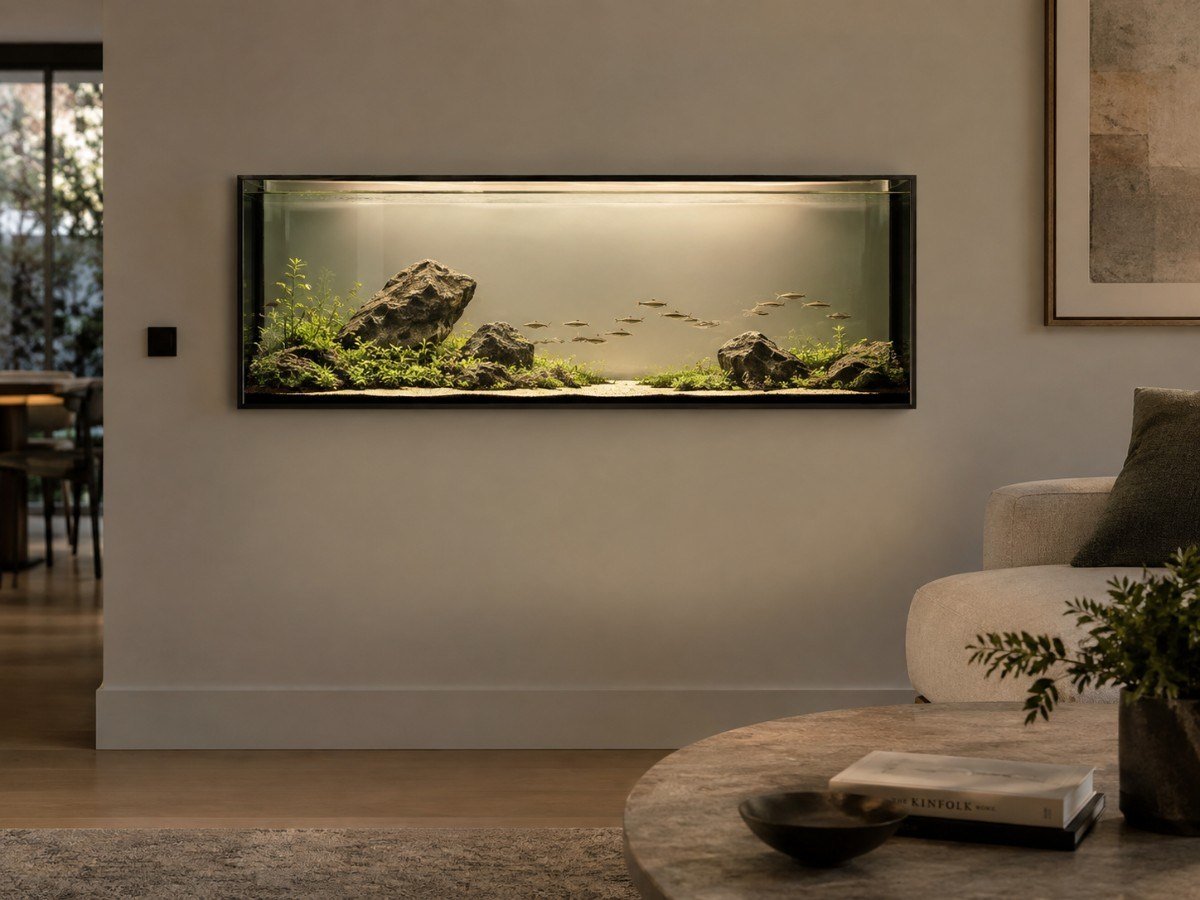
Two quite different products get called the same thing here, and it is worth separating them.
A wall-mounted aquarium is a slim tank hung on a wall like a framed panel. It is shallow by design, typically a few inches front to back, and it suits apartments and offices where floor space is the constraint. Because the water volume is small, the water parameters swing faster and the stocking has to be modest, but the installation is straightforward and the visual effect in a narrow room is strong.
A built-in or partition aquarium is a structural job. The tank sits inside an opening in a wall, or forms the wall itself, and is viewed from one side or from both. The most popular version in Chennai homes is an aquarium set into the partition between the hall and the dining area, where it divides the two spaces without closing either of them off.
Partition tanks need planning before the masonry is finished. The opening has to be sized for the tank plus the frame and the service clearance, the sill has to carry the load, and the plumbing and power have to be routed to wherever the sump will live, which is often a utility area on the far side of the wall. Retrofitting all of that into a finished wall is possible but it costs more and involves cutting work you would rather avoid.
A see-through tank viewed from both sides also has a design consequence that surprises people. There is no back panel to hide equipment against, so the heater, the inlet, the outlet and the wiring all have to be concealed within the hardscape or routed externally. That is a solvable problem, but it has to be designed in from the start rather than fixed afterwards.
Built-in aquariums are at their most economical when they are planned during construction or a full renovation. If your interior work has not started yet, this is the moment to bring the aquarium into the drawings.
Marine and Planted Setups
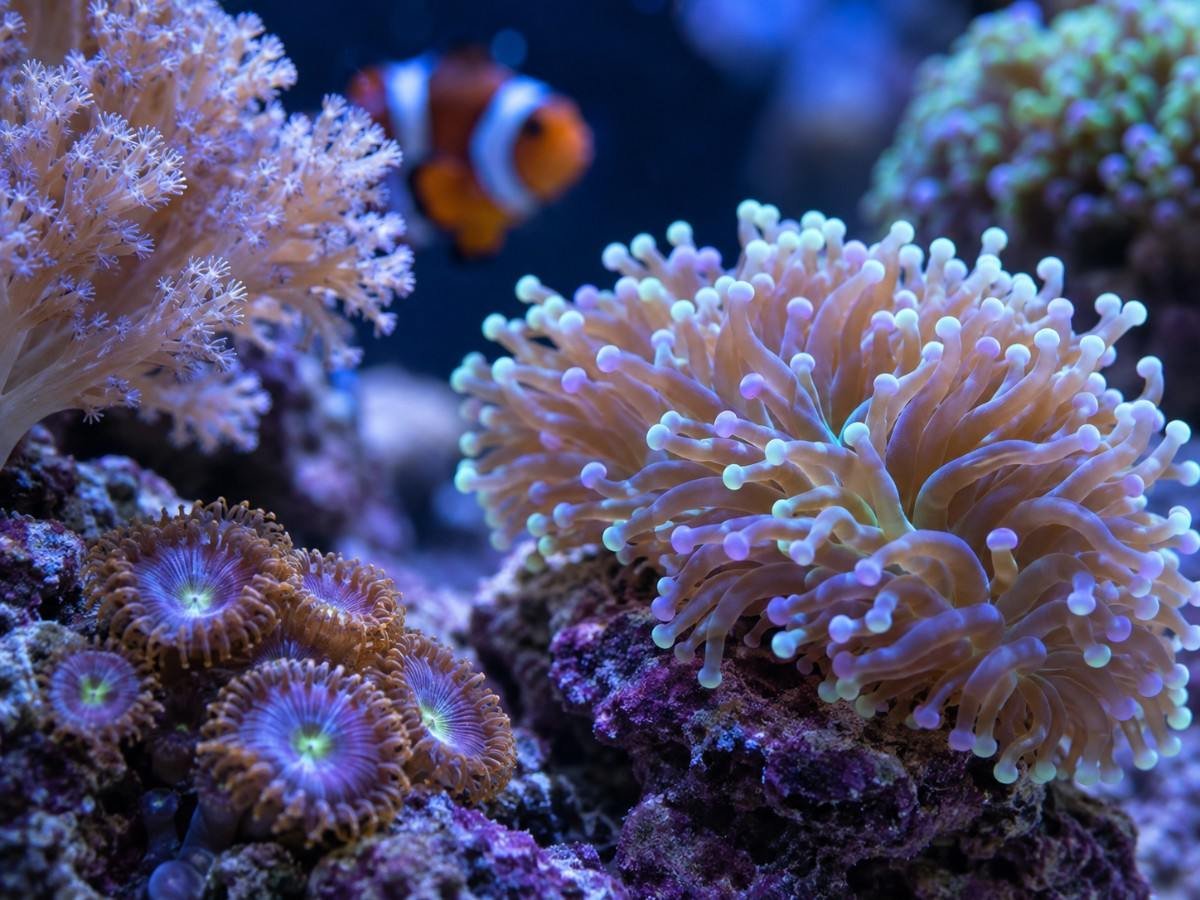
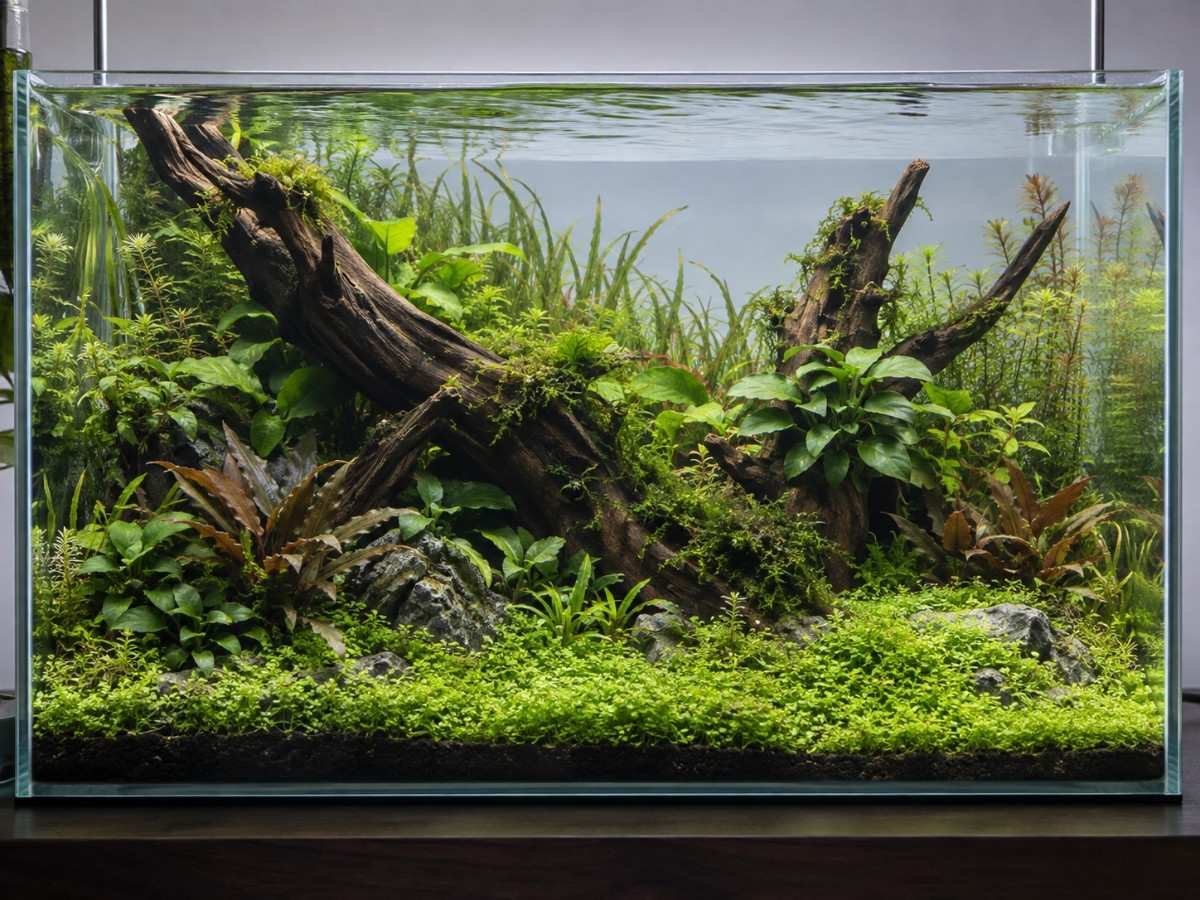
These are the two specialist directions a custom aquarium can take, and both are worth understanding before you commit, because they change the running cost more than the build cost.
A marine aquarium can be fish only or a reef system with corals. Both need a protein skimmer, salt mixing and RO water, and in Chennai both need a chiller. Our ambient temperatures sit above the range most marine livestock tolerate for large parts of the year, and a chiller is not an optional upgrade here the way it might be in a cooler climate. A reef system adds high output lighting, more demanding water chemistry and closer parameter monitoring on top of that. If you want a saltwater aquarium in Chennai, plan for the chiller and the electricity it will use as part of the specification, not as an afterthought.
A planted aquarium runs at the other end of the equipment spectrum but demands more of your time. Pressurised CO2, appropriate lighting intensity and duration, a nutrient substrate and regular trimming are what separate a planted tank that fills out from one that grows algae. Aquascaping is the design layer above that, arranging hardscape and planting so the layout reads well from the intended viewing position and continues to read well as the plants grow in.
Most clients who want the look of a planted tank without the trimming schedule end up on a scheduled maintenance plan, which is a perfectly reasonable way to own one.
The honest comparison is this. A well specified freshwater community tank is the lowest effort option. A planted aquascape is low in equipment cost and high in attention. A reef is high in both. All three are things we build and the right answer depends on how much involvement you actually want, not on which looks best in photographs.
Shapes, Sizes and the Engineering Behind Them
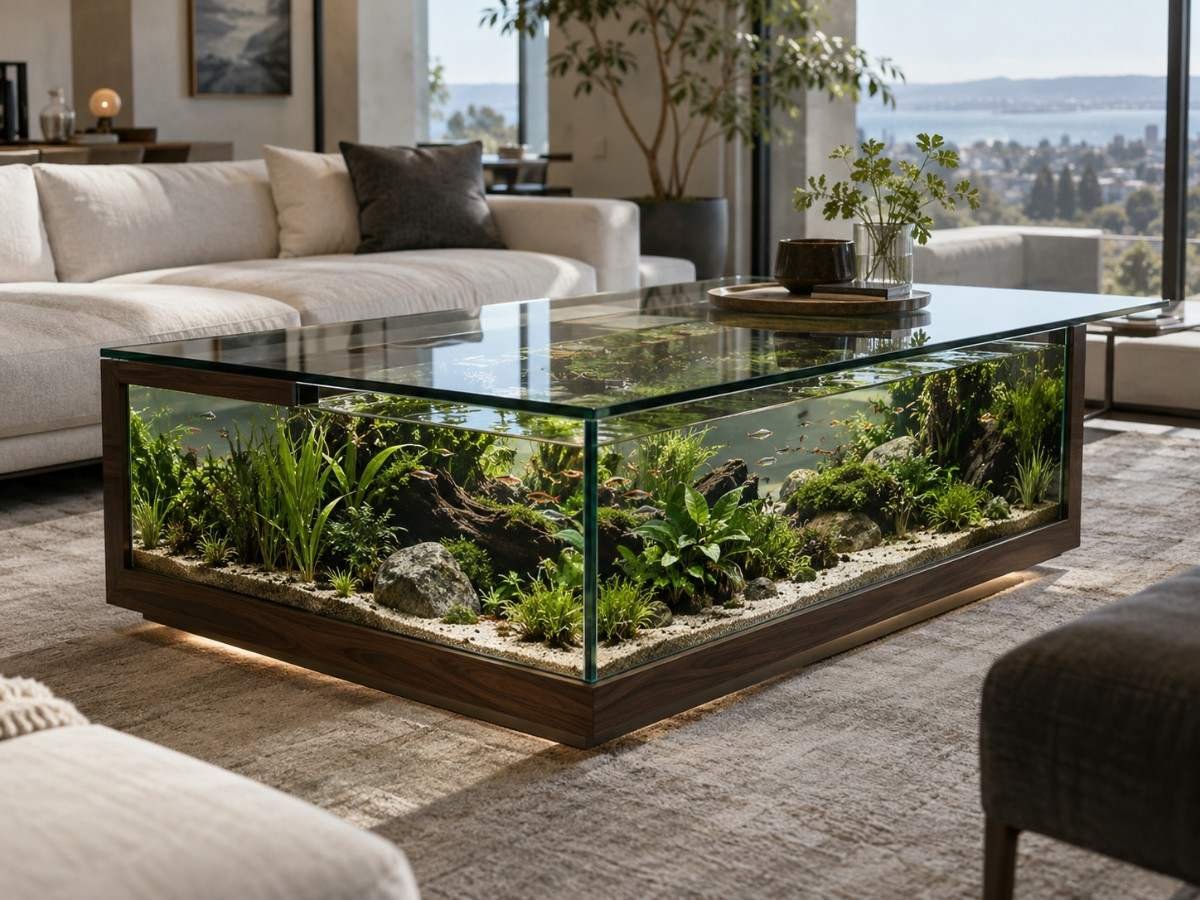
Custom fabrication opens up shapes that standard tanks cannot offer. Seamless cylindrical aquariums, pillar tanks built around a structural column, coffee table aquariums, L shaped corner units, bow fronts, arches and hexagons are all achievable, mostly in acrylic, because acrylic can be formed and bonded without visible joints.
Shape complexity is one of the larger cost drivers in a custom build. A seamless cylinder of a given volume costs meaningfully more than a rectangular tank of the same volume, because forming and polishing a cylinder is a different process from assembling flat panels. A rectangular tank with one curved front sits somewhere in between. If your budget is fixed, choosing a simpler geometry and spending the difference on filtration usually produces a better aquarium than the reverse.
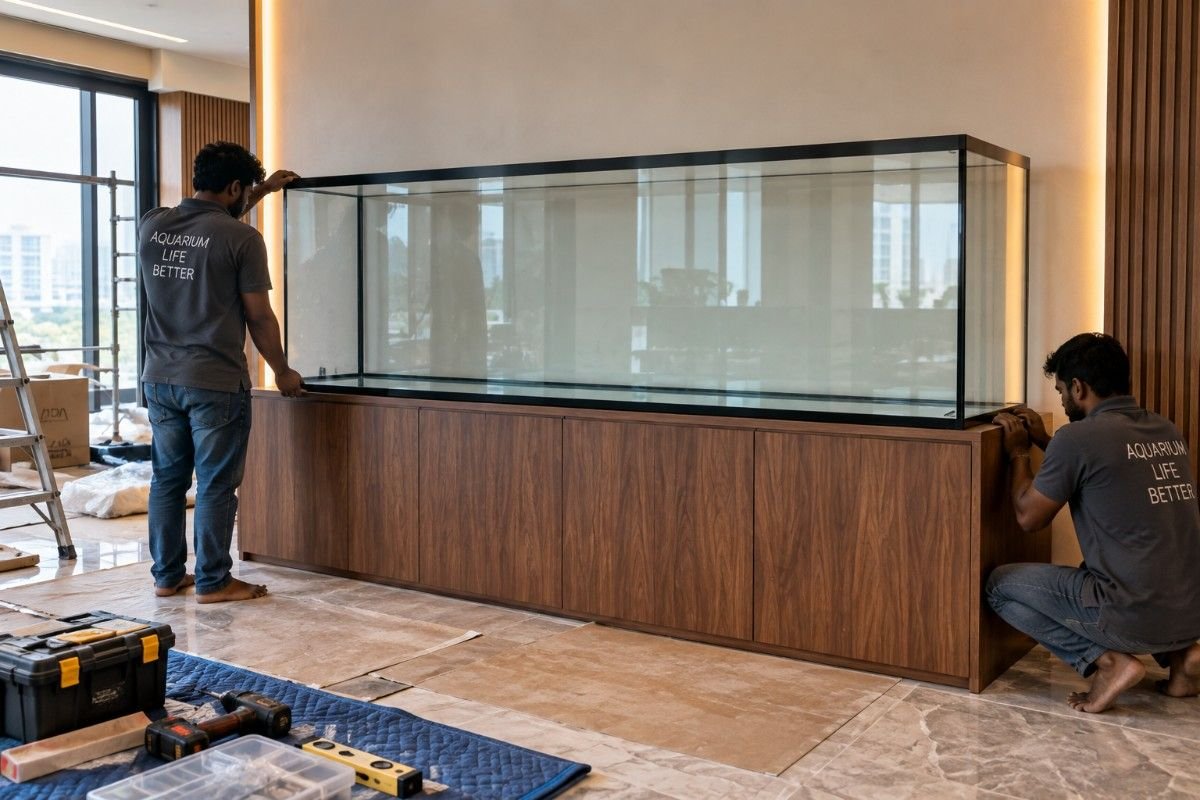
Size has fewer limits than people expect on the fabrication side. The real limits are access and structure. A tank has to physically reach its position, which in an apartment means a lift, a stairwell or a window, and it has to sit somewhere the building can carry it.
Weight, Floors and Structural Safety
This is the question most worth asking before you order anything, and most aquarium pages avoid it
Water weighs about one kilogram per litre. A tank measuring six feet by two feet by two feet holds roughly 680 litres, which is around 680 kilograms of water alone. Add the tank, the substrate, the hardscape, the cabinet and the sump and the total is close to a tonne, sitting on a footprint of a little over one square metre.
For comparison, Indian residential floors are designed under IS 875 Part 2 for an imposed live load of 2 kilonewtons per square metre in rooms, which works out to roughly 200 kilograms per square metre. A tank of the size described above imposes several times that figure over its own footprint.
That does not automatically mean the tank cannot go in. Slabs are designed with safety factors, the load from a tank is spread by the cabinet base rather than concentrated on legs, and the figures in the code are minimums rather than actual capacity. What it does mean is that a large aquarium in a home is a structural question and deserves a structural answer.
The practical approach we follow is straightforward. Position large tanks along a load bearing wall or directly over a beam rather than mid span. Use a full width cabinet base that distributes the load across the whole footprint instead of four narrow legs. Keep the tank level, because an out of level tank puts uneven stress on the seams. And for anything genuinely large, particularly on an upper floor of an apartment, get a structural engineer to look at the slab before fabrication begins.
We will tell you when a tank you have asked for needs that check. We would rather lose a size upgrade than install something that concerns us.
Our Design and Build Process
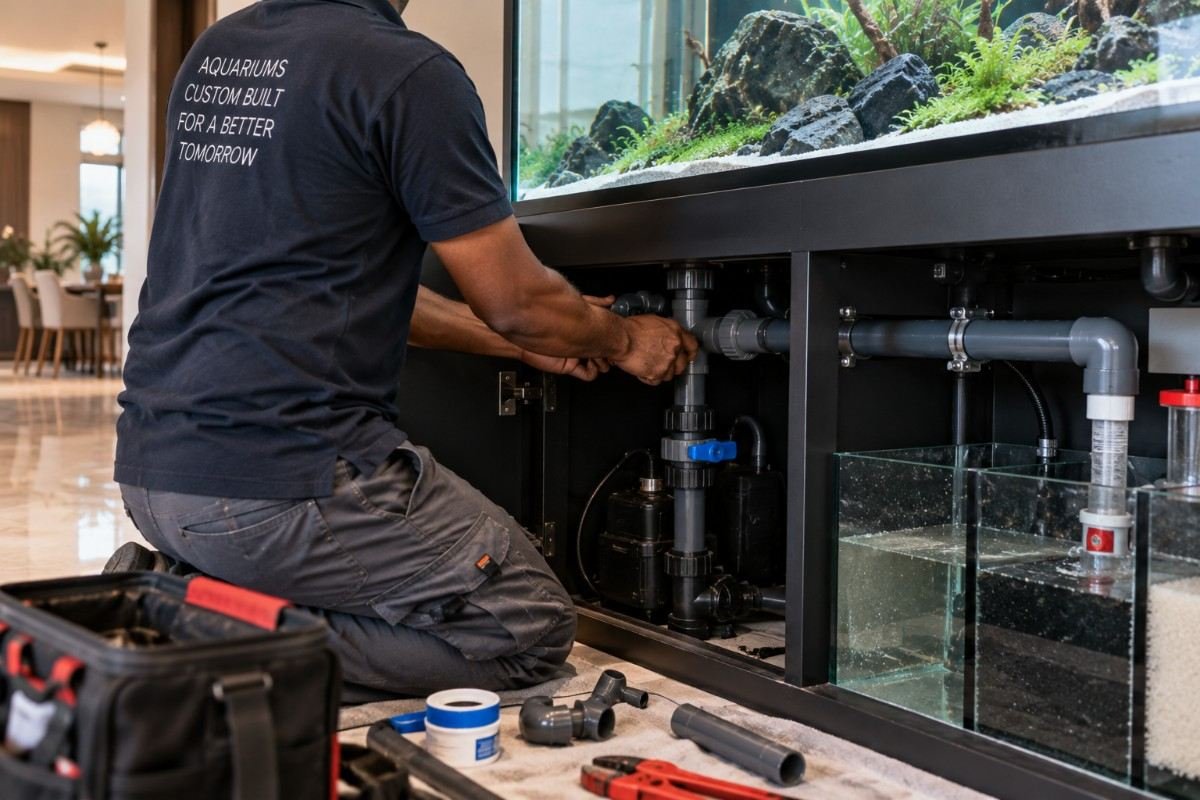
Every project follows the same sequence, scaled to its size.
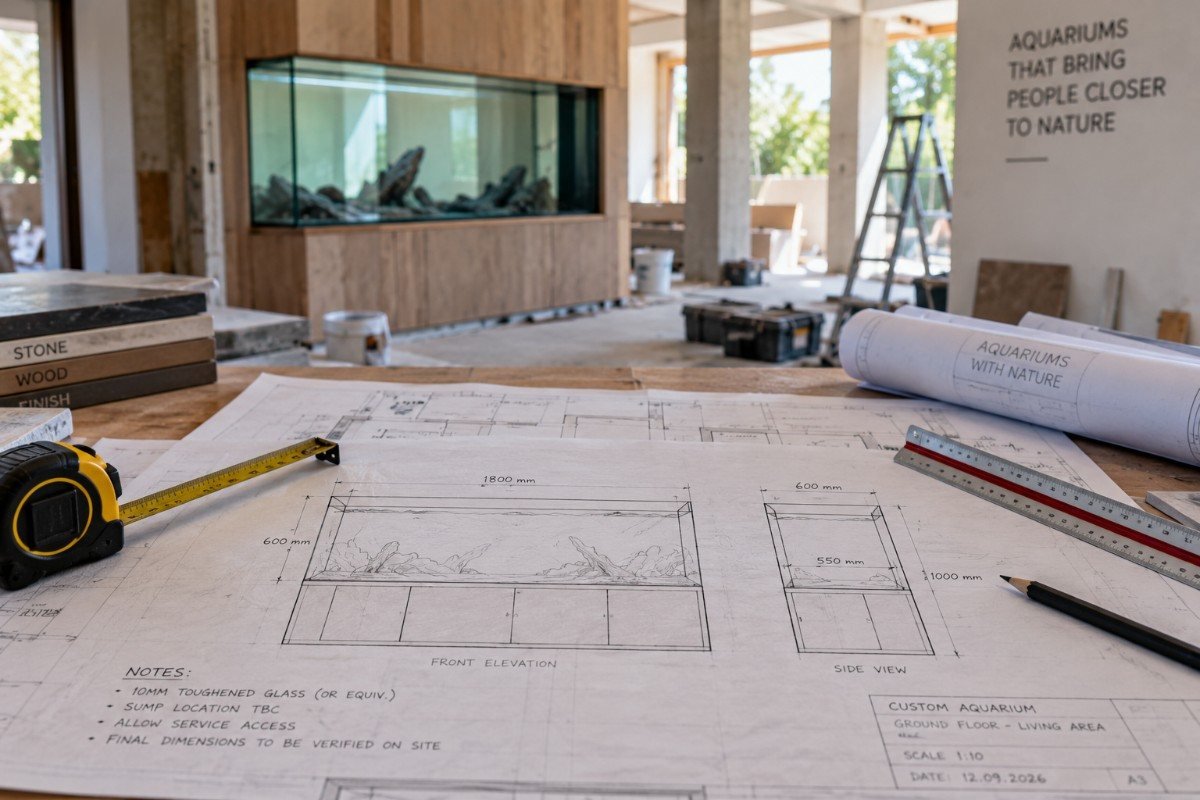
We begin with a site visit and measurement in Chennai, or with your drawings if the site is elsewhere or not yet built. We look at the space, the viewing angles, the available power and water, the drain route and the floor. From that we produce a concept with dimensions and, where the project warrants it, a drawing you can share with your architect.
Next comes specification. Material, panel thickness, filtration type and capacity, lighting, temperature control, cabinetry and finish are all decided and quoted together, so you are approving a complete system rather than a tank with variables left open.
Next comes specification. Material, panel thickness, filtration type and capacity, lighting, temperature control, cabinetry and finish are all decided and quoted together, so you are approving a complete system rather than a tank with variables left open.
Fabrication follows approval. Acrylic tanks are formed and solvent bonded and need time to cure properly before they can be moved or filled, and rushing that stage is the most common cause of seam problems later. Cabinetry is built in parallel.
Installation covers delivery and positioning, plumbing and electrical connection, a leak test and initial filling. After that the system needs to cycle. Establishing the biological filtration that keeps a tank stable typically takes around four to six weeks, and stocking is staged across that period rather than done on day one. This is a biological constraint, not a scheduling one, and any builder who offers a fully stocked tank on installation day is setting you up for problems.
Handover includes running you through the system and agreeing a maintenance arrangement. For commercial installations that is normally a scheduled contract. For homes it can be a contract or a one off orientation, depending on how involved you want to be.
Working With Your Architect or Designer
A good proportion of our work comes through architects, interior designers and contractors, and those projects go best when we are brought in early.
We can work from your drawings, including AutoCAD files, and return the tank and system details in a form you can drop into the set. The provisions an aquarium needs are modest but specific. A dedicated power supply near the tank position with enough points for the pump, lighting, heater or chiller. A water line within reach for top ups. A drain route for water changes and servicing. Clearance for the sump, usually below the tank or in an adjacent service space. Service access to all of it, which is the item most often designed out by accident. And, for larger tanks, agreement on the position relative to beams and load bearing walls before the layout is frozen.
If the aquarium is being set into a partition or a wall, the opening dimensions have to account for the tank, the frame and the clearance, which is not the same as the tank size. Give us the intended opening and we will size the tank to it, or give us the tank you want and we will tell you the opening it needs.
Send drawings and we will respond with dimensions, load figures and service requirements you can coordinate against.
What a Custom Aquarium Costs
There is no useful single answer to this, and any figure quoted without seeing the space is a guess. What is useful is knowing what moves the number, so you can steer your own budget.
Material and shape come next. Glass is the economical choice at small and mid sizes, acrylic becomes competitive as tanks get large, and shape can move the number more than size does. Rectangular is the baseline, curves step up from there, and seamless cylinders sit at the top.
Volume sets the baseline, and cost rises faster than volume does, because a larger tank needs thicker panels, a bigger stand and a larger filtration system all at once.
Filtration and life support is where budgets are most often underestimated. A canister filter on a freshwater community tank sits at one end. A sump with a protein skimmer, a chiller, reef lighting and monitoring is at the other, and the gap between them can exceed the cost of the tank itself.
Cabinetry and civil work varies from a fabricated stand to a built-in installation with stone cladding and concealed service access, and built-in work planned during construction costs less than the same work retrofitted into a finished wall.
Finally there is running cost, the figure people forget. Electricity for pumps, lighting and any chiller, plus water, salt for marine systems, food, media replacement and servicing. A reef tank costs meaningfully more each month than a planted freshwater tank of the same size.
Send us the dimensions of the space, or a drawing, and we will come back with a specification and a figure rather than a range.
Tell Us About Your Space
Tell us the space you have and what you would like in it. For sites in and around Chennai we will visit and survey it ourselves. For projects elsewhere in South India, we can beginEvery custom aquarium in Chennai starts the same way here, with a measurement and a conversation about how you want to live with it. There is no catalogue to choose from and no standard size to fit into. from photographs, dimensions and drawings.
Send us the dimensions of the wall or room you have in mind, or your architect’s drawing, and we will come back with a design, a specification and a quotation. For projects in and around Chennai, we will visit the site and measure it ourselves.
Frequently Asked Questions
How much does a custom aquarium cost in Chennai?
There is no fixed price, because every tank is built to a measurement. Cost is driven by volume, material, shape complexity, the filtration system and the cabinetry. A rectangular glass freshwater tank on a fabricated stand sits at the economical end. A large acrylic reef system with a chiller and built-in cabinetry sits at the other. Send us the dimensions of your space and we will quote a complete system rather than a range.
Is acrylic better than glass for a large aquarium?
For most large tanks, yes. Acrylic is around half the weight of glass, far more impact resistant, and can be formed into curves and seamless cylinders that glass cannot achieve. Glass remains the better choice for standard rectangular tanks up to around four feet, where it is more economical and more scratch resistant. The main trade off is that acrylic scratches more easily but those scratches can be polished out, while damaged glass cannot be repaired.
Where should an aquarium be placed as per vastu?
Most practitioners recommend the north, east or north east of the home, with the living room as the preferred room. Some practitioners in Tamil Nadu recommend the south east corner of the hall instead. The directions generally advised against are the south and south west, and the bedroom and kitchen are usually avoided. If you have a vastu requirement, tell us before the drawings are finalised, because the tank direction determines where the sump, drain and power points are placed.
What size aquarium suits a hotel lobby?
Lobby tanks are usually sized to the architecture rather than to a standard dimension, which normally means acrylic, because the sizes and shapes involved are beyond what glass can practically do. The determining factors are the viewing distance, the available structural position, and access for the tank to reach that position. Lobby installations should be planned with the interior contractor rather than added after handover, and they should be specified with a maintenance contract from the start.
Do you work from an architect’s drawings?
Yes. We work from architects’ and interior designers’ drawings, including AutoCAD files, and return tank dimensions, load figures and service requirements that can be coordinated into the drawing set. The earlier we are brought in, the more of the aquarium’s requirements can be built into the design rather than retrofitted.
How long does it take to build a custom aquarium?
Fabrication time depends on size, material and shape, and we confirm it at quotation. What is fixed is what happens after installation. A new aquarium needs around four to six weeks for its biological filtration to establish before it can be fully stocked, and stocking is staged across that period. Plan the project around that window rather than around the installation date.
Do I need floor reinforcement for a large home aquarium?
Possibly, and it is worth checking. A six foot by two foot by two foot tank holds around 680 litres, which with the cabinet, substrate and sump comes to close to a tonne over roughly one square metre. Indian residential slabs are designed under IS 875 Part 2 for an imposed load of about 200 kilograms per square metre, so a large tank exceeds the nominal design load over its footprint. In practice, positioning the tank along a load bearing wall or over a beam and using a full width cabinet base resolves most situations. For very large tanks or upper floor apartments, have a structural engineer assess the slab before fabrication.
How much does a custom aquarium cost in Chennai?
Yes, and it is one of the most popular options in Chennai homes, particularly between the hall and the dining area. The opening needs to be sized for the tank plus the frame and service clearance, the sill has to carry the load, and the plumbing and power must be routed to the sump location before the masonry is finished. It can be retrofitted into a finished wall, but it is considerably easier and cheaper when planned during construction.
Do you design aquariums specifically for homes?
Yes. Residential aquarium design can be planned for living rooms, feature walls, entrances, villas and other interior spaces. Placement, scale and maintenance access should be considered from the start.
Can you install aquariums for offices, hotels and restaurants?
Yes. Commercial aquarium projects need both visual impact and dependable day-to-day operation. The design should consider viewing traffic, service access and a realistic maintenance plan.
Should I choose acrylic or glass for my aquarium?
The right material depends on the size, shape, visual requirement, location and budget. For larger or highly customised installations, acrylic may be worth considering; for other projects, glass may be more practical. The material should be selected as part of the design process.
Do you build koi ponds from scratch?
Yes. A koi pond project can include pond planning, construction approach, water circulation, filtration and the ongoing maintenance strategy needed for healthier fish and more stable water conditions.
Can an aquarium be built into a wall or used as a partition?
Yes, and it is one of the most popular options in Chennai homes, particularly between the hall and the dining area. The opening needs to be sized for the tank plus the frame and service clearance, the sill has to carry the load, and the plumbing and power must be routed to the sump location before the masonry is finished. It can be retrofitted into a finished wall, but it is considerably easier and cheaper when planned during construction.
What is included in a turnkey aquarium project?
Design and drawings, fabrication of the tank, the full life support system including filtration, circulation, lighting and temperature control, the cabinetry or built-in surround, delivery and positioning, plumbing and electrical connection, leak testing, filling, aquascaping or hardscape installation, staged stocking, and handover with a maintenance arrangement. What is not included by default is civil work such as cutting a wall opening, and any structural assessment, both of which we will flag at quotation if your project needs them.
Do you build aquariums outside Chennai?
Chennai is our base and where we handle site visits directly. We also take projects elsewhere in Tamil Nadu and in other Indian metros including Bangalore. For projects outside Chennai, the design stage works from drawings and photographs, and installation is scheduled as a site visit.

Designs, builds and maintains custom aquariums, koi ponds and aquatic features with a focus on thoughtful engineering and long-term care.
SUBSCRIBE FOR UPDATE
©Living Art Aquarium 2026. All rights reserved.